
The Best Winter Hiking Trails in the Red River Gorge
Winter in the Red River Gorge has its own kind of magic. With cooler temperatures, crisp air, and far less trail traffic, this time of year offers a quieter, more peaceful way to experience the landscape. Once the leaves have fallen, the woods open up, revealing clifflines, rock features, and ridgelines you might walk right past in other seasons. It’s the perfect time to slow down, look deeper, and discover parts of the Gorge you didn’t even know were there.
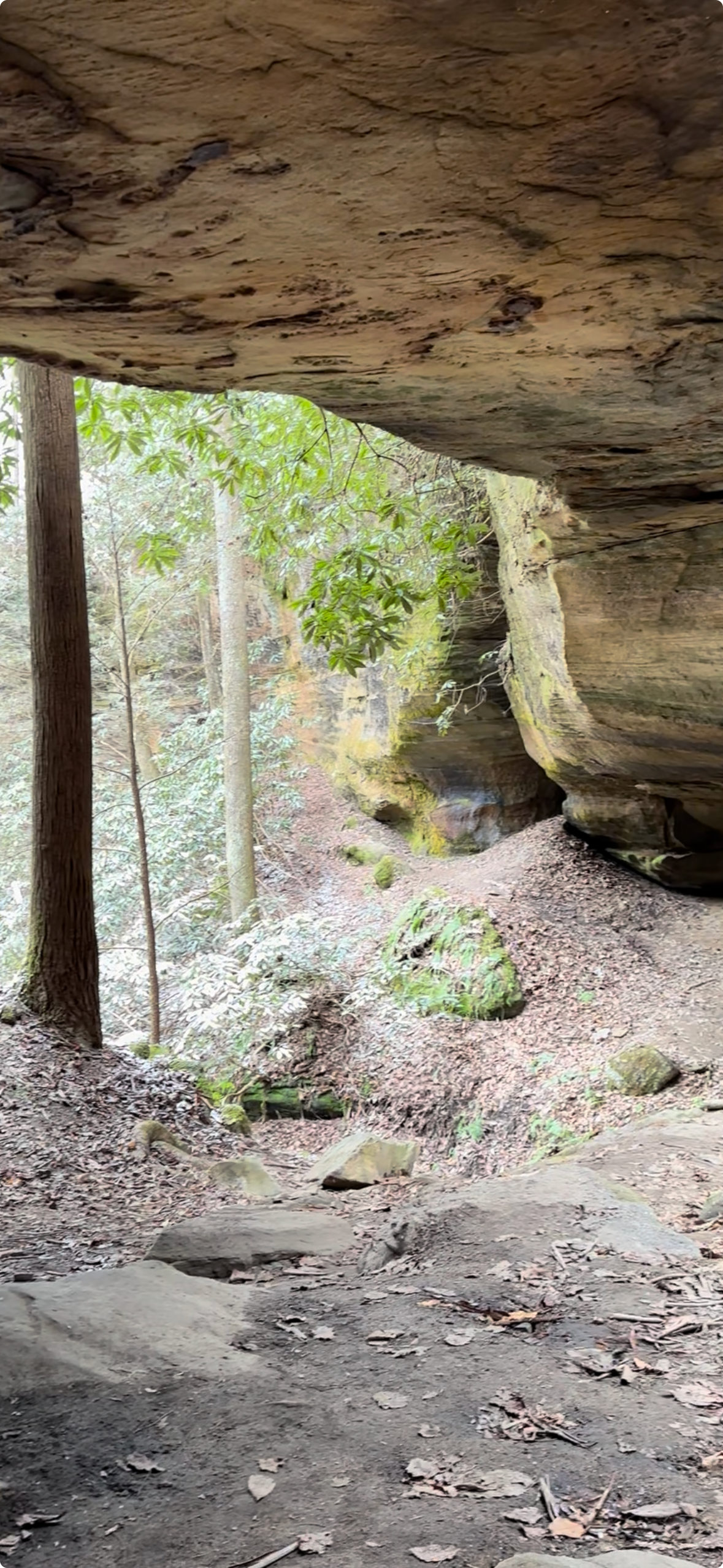
Red Byrd Arch Trail
Distance: ~3.2 miles total
Difficulty: Moderate
Why It’s Great in Winter:
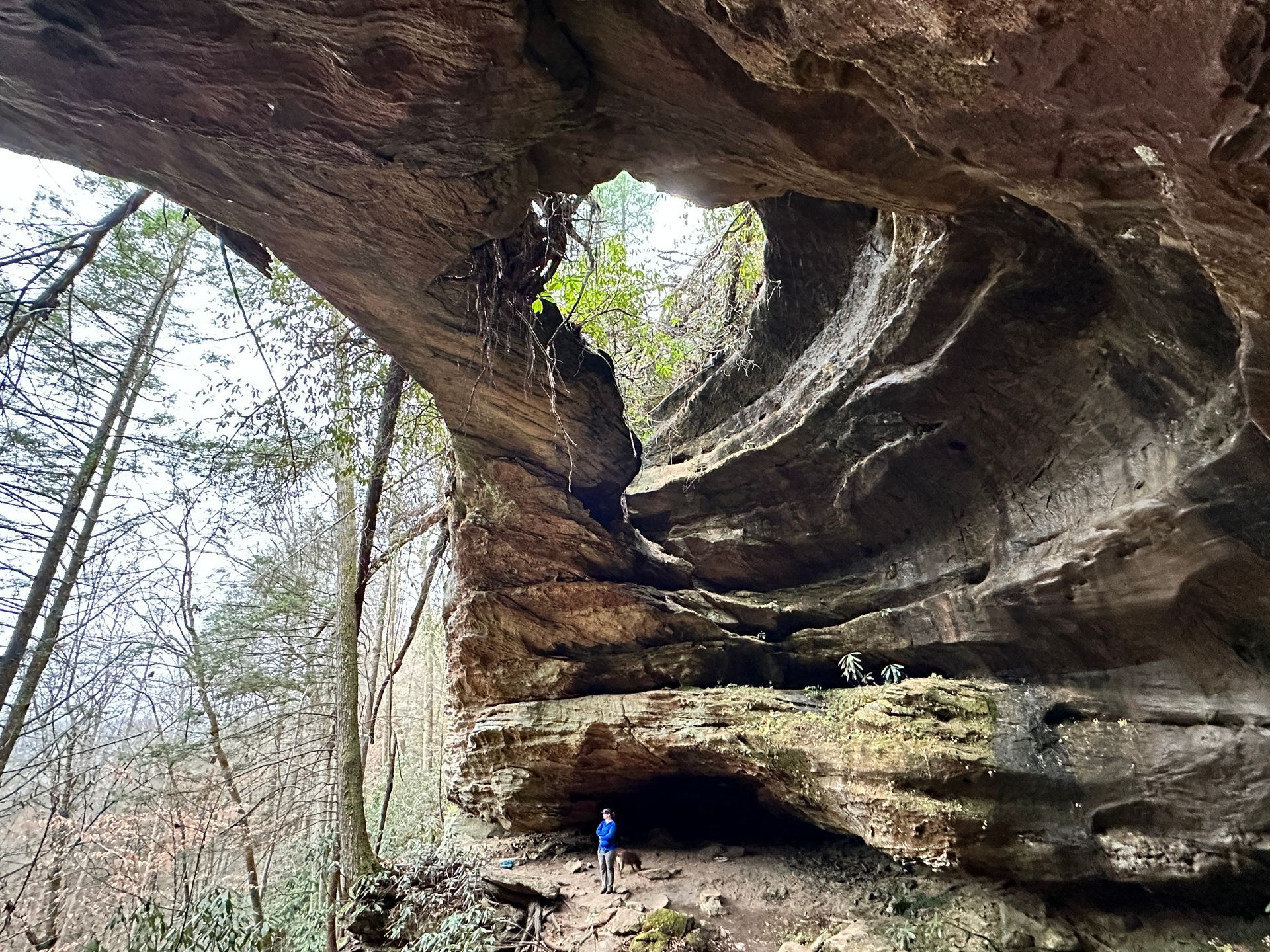
Red Byrd Arch feels especially special in winter. With the leaves down, the forest opens up and you get expanded views of surrounding ridgelines and sandstone features that are hidden much of the year. The arch itself is unique. It is more like a natural window or hole in the rock than a traditional sweeping arch and you can explore both above and below it for different perspectives.
There are two ways to access Red Byrd Arch, and route choice matters, especially in winter. One approach requires crossing the Red River, which is not recommended during colder months due to water levels and temperatures. The alternative route follows old logging roads through beautiful, mature forest before reaching a short scramble with some exposure near the end. Because of this terrain, and the fact that the trail is unmarked, this hike feels more moderate than the mileage suggests. A GPS device or map app is highly recommended.
Highlights
- A distinctive “window-style” arch you can view from multiple angles
- Quieter in winter, with better visibility through the forest
- Scenic approach through old forest and historic logging roads
- A bit of route-finding adds to the sense of adventure
Eagle Point Buttress (Eagle’s Nest)
Distance: ~2.5 miles (longer if done as a loop)
Difficulty: Moderate
Why It’s Great in Winter:
Eagle Point Buttress—often called Eagle’s Nest—is one of the most jaw-dropping overlooks in the Red River Gorge. From the viewpoint, you get sweeping, elevated views across the Gorge, including the winding bends of the Red River far below. In winter, when the leaves are down, the landscape opens up dramatically and the visibility from this perch is hard to beat.
The hike begins with a
steep climb, but the payoff comes quickly, and the return trip is mostly downhill. The route starts on the established
Osborne Bend Trail before cutting right onto an unmarked path that meanders out to the overlook. This can be done as a straightforward out-and-back, or, for those seeking more adventure, as a loop that involves scrambles descending toward and traveling along the Red River.
Because the trail is unmarked and the scrambles are not always obvious, GPS navigation is strongly recommended. This area can be confusing, and it’s easy to wander off-route if you’re not paying close attention.
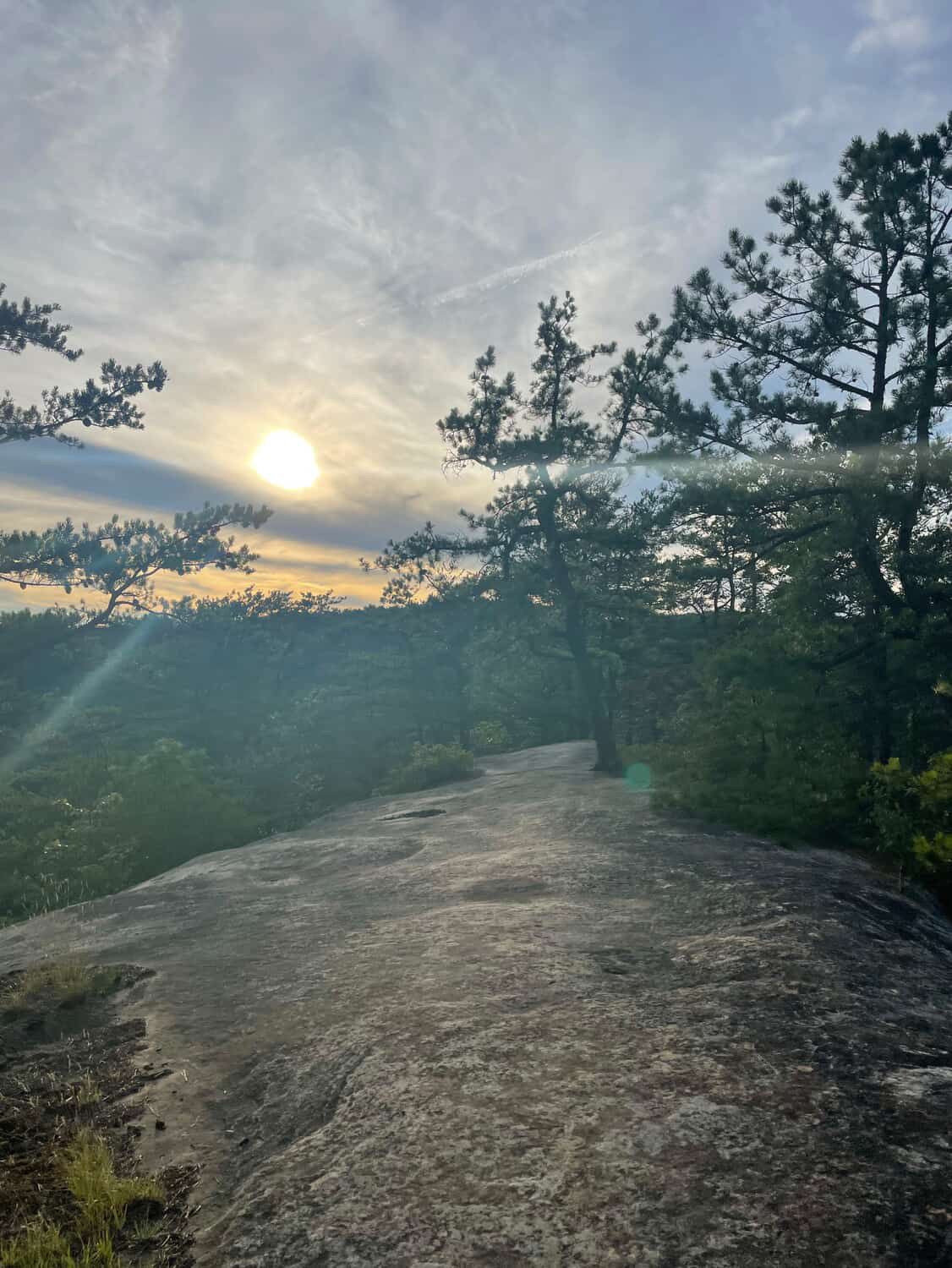
Tarr Ridge to Jennifer’s Overlook
Distance: ~3 miles
Difficulty: Easy
Why It’s Great in Winter:
Tarr Ridge to Jennifer’s Overlook is a mellow ridgeline hike with a big payoff, making it a great choice for those looking for an easier outing with spectacular views. In winter, the trail feels more open, and the leafless trees reveal long sightlines across the surrounding valleys and cliffs. Along the way, you’ll pass multiple overlooks, offering fun little side quests as you make your way toward the main destination.
The trail begins fairly open before weaving through a dense stretch of mountain laurel. After this section, you’ll come to a small clearing that’s often used as a campsite. From here, a path to the right leads out to Jennifer’s Overlook, where there is a large boulder you can walk out onto for sweeping views. There’s an optional short scramble if you want to reach the very edge, but the overlook is still impressive without it. You can continue past this point toward Jennifer’s Point, though this involves a more serious scramble and is not recommended for most hikers.
This is an unmarked trail, so GPS navigation is encouraged to avoid getting off route. There are also several downed trees from past storms, with paths going around or over them. It adds to the sense of adventure, but is something to keep in mind for accessibility.
Highlights
- Easy ridgeline hiking with multiple overlooks along the way
- Big-view payoff for relatively little effort
- Optional small scramble for more adventurous hikers
Classic winter forest feel, including a tunnel of mountain laurel.
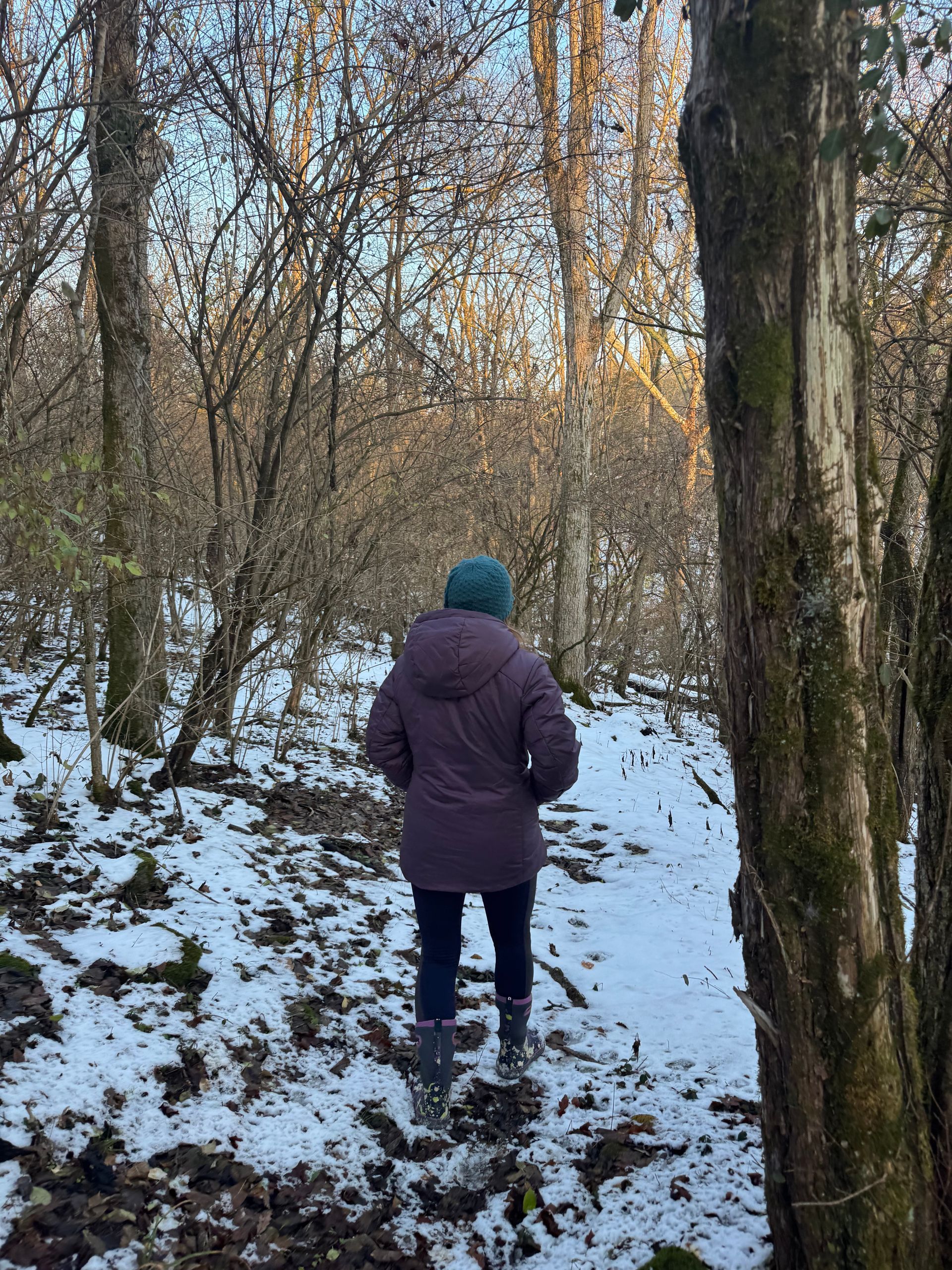
Honorable Mention: Winter Forest Road Walks
Not every great winter outing in the Red River Gorge has to be a traditional trail. Several
Forest Service roads close to motorized vehicles during the winter months, creating wide, gradual paths that make for easy, low-stress hiking. These routes are perfect for folks looking for a mellow walk, families, or days when you just want to stretch your legs without big elevation changes.
Because these are still active access roads,
do not block the entrances with your vehicle. Forest crews and emergency vehicles may still need to travel these roads, even when they’re closed to public traffic.
Forest roads closed to motorized use in winter include:
- Forest Roads 9, 9A, & 9B – Indian Creek area
- Forest Road 10 – Chimney Top Road
- Forest Road 24 – Rock Bridge Road
- Forest Road 39 – Tunnel Ridge Road (past Gray’s Arch)
Foot traffic is welcome, and winter road walks can be a peaceful way to experience the Gorge with minimal crowds and expansive views through the trees.
Winter in the Red River Gorge invites a slower pace, quieter trails, wider views through the trees, and the chance to experience familiar landscapes in a whole new way. Whether you’re wandering out to an overlook, searching for arches, or simply enjoying a peaceful forest road walk, this season has a way of making the Gorge feel both bigger and more intimate at the same time. Take your time, tread lightly, and soak in the stillness that winter brings.
Before heading out, always check the road and weather conditions. KY-715 through the Gorge is often one of the last roads to be treated during inclement weather, and icy or hazardous driving conditions can linger longer than expected. A little planning goes a long way in making sure your winter adventure is a good one.