
I Grew Up on This Cliff: Notes From Twenty-Five Years in the Red River Gorge
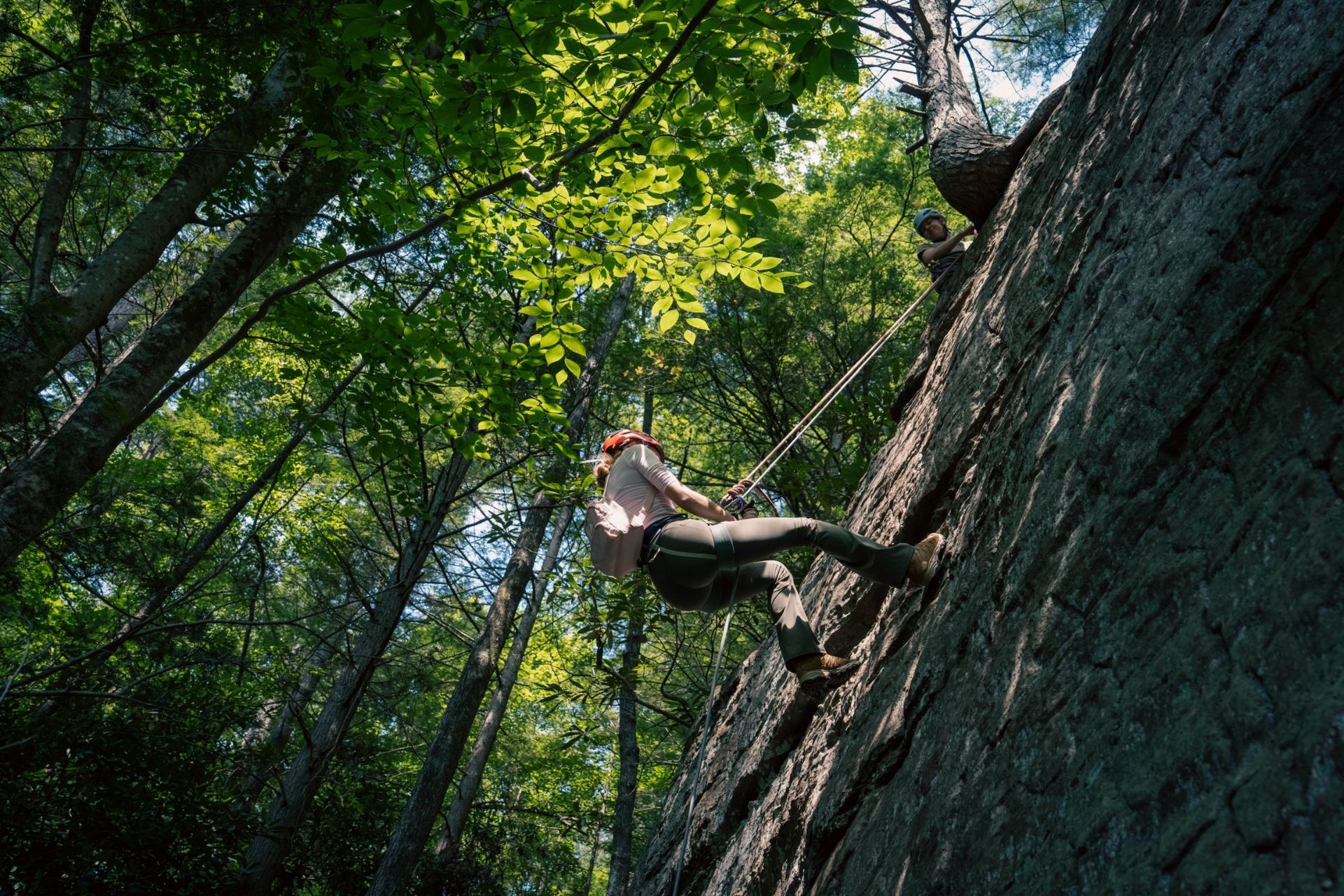
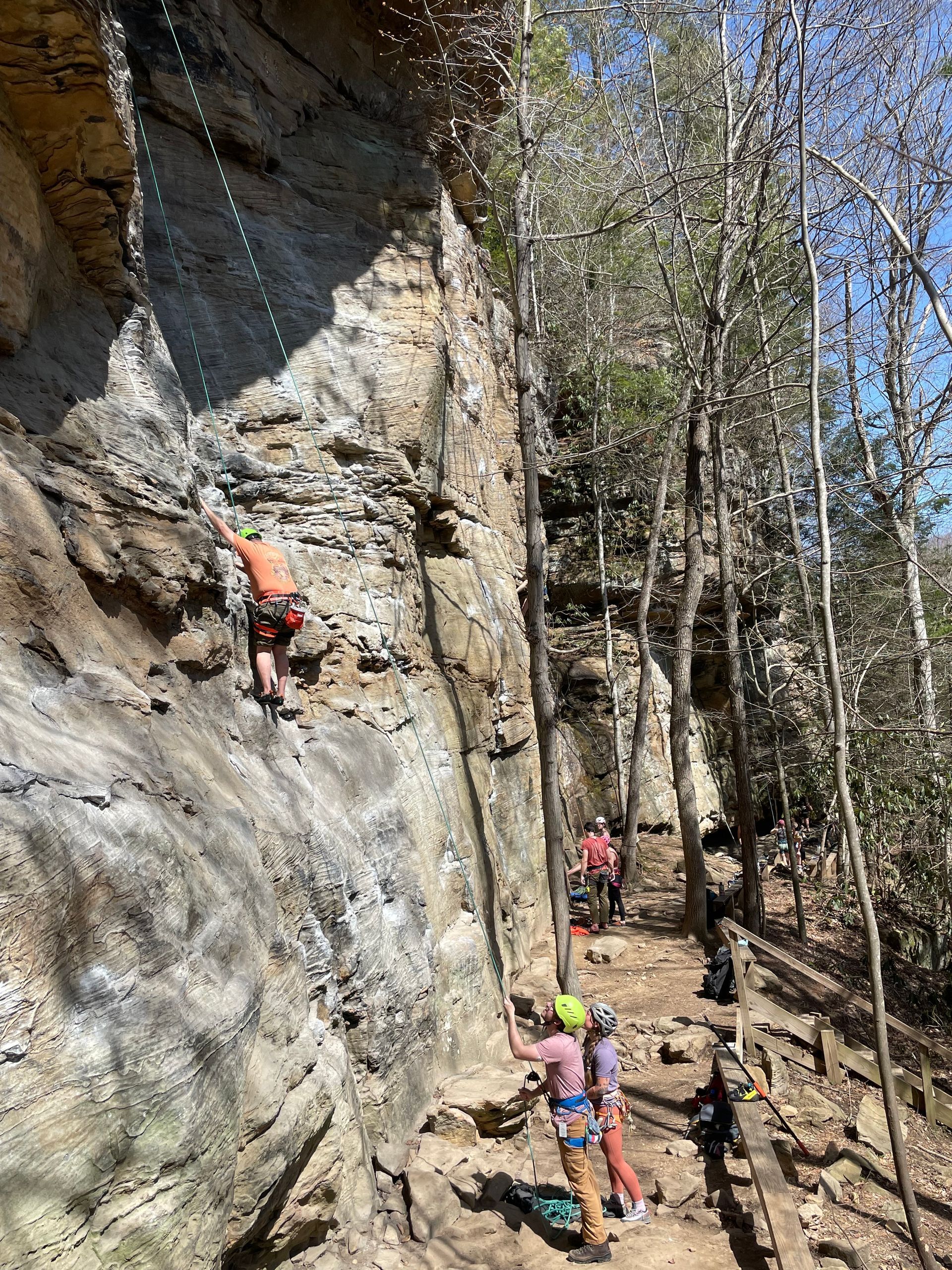
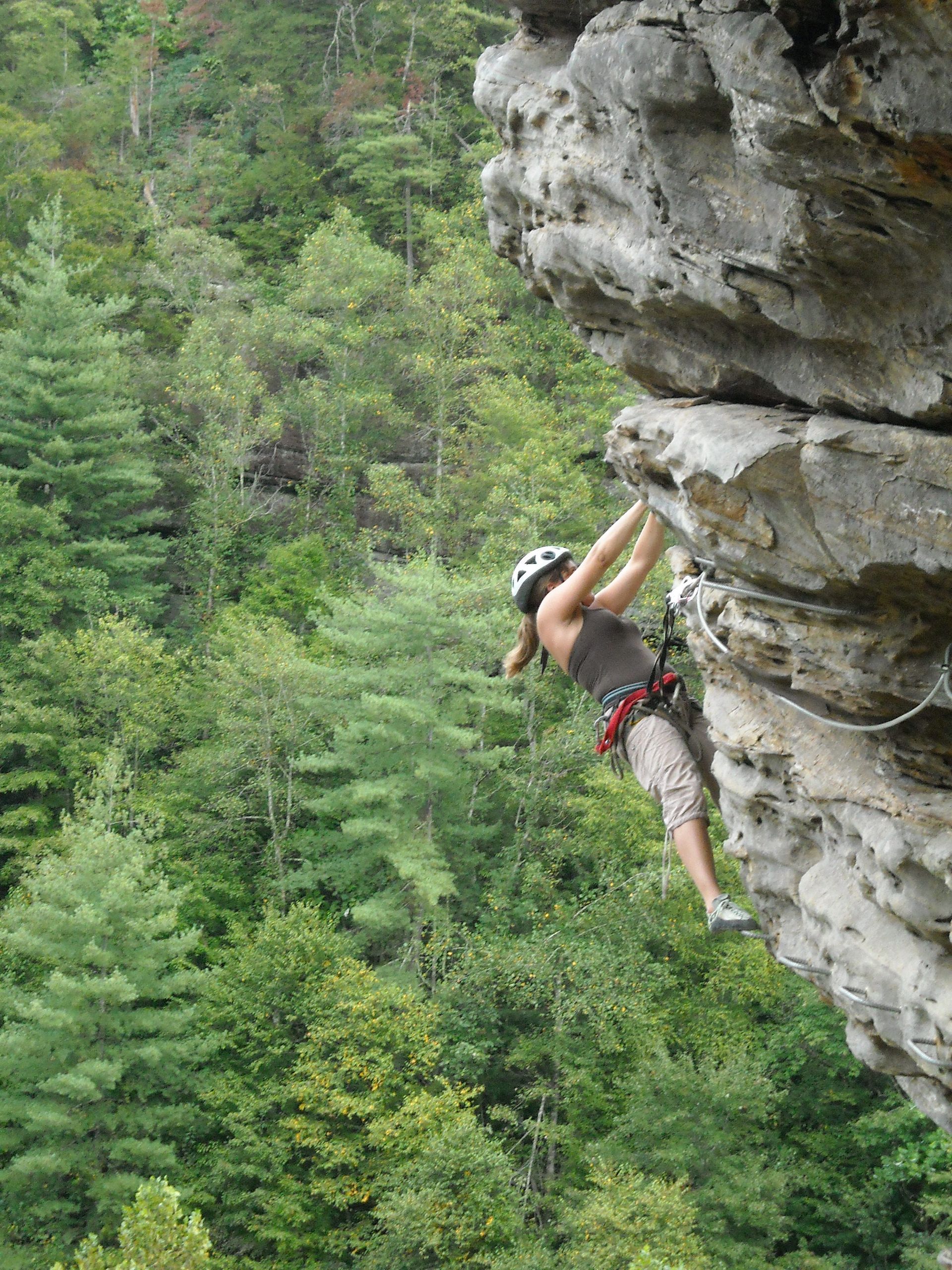
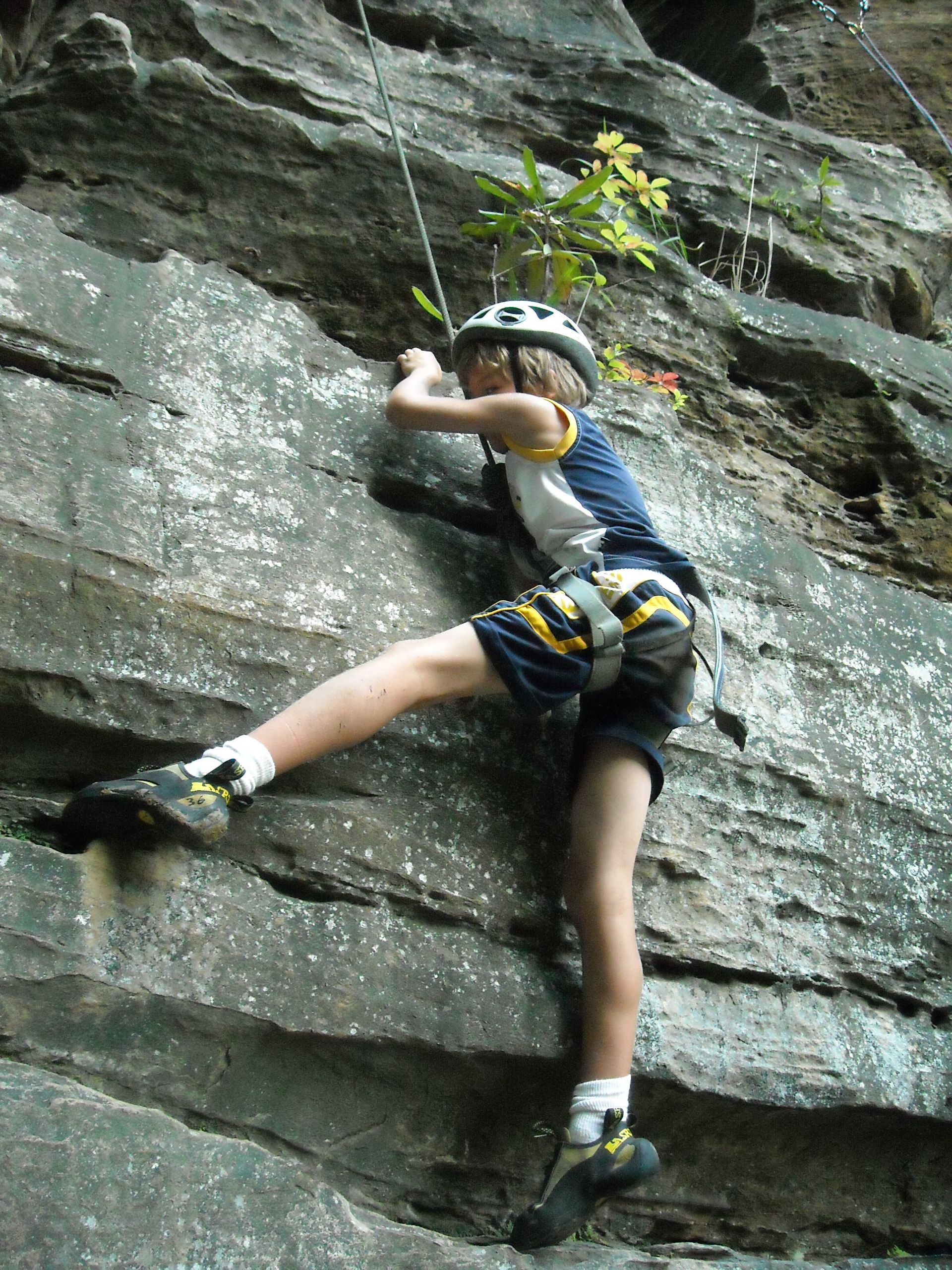
When my family moved to Kentucky, I was about eleven years old, and my parents were running Torrent Falls as a bed and breakfast. Guests would sometimes tell them they were heading out climbing and offer to take my sister and me along.
Looking back now, I'm a little shocked my parents let their daughters go climbing with people they barely knew.
But I am so glad they did.
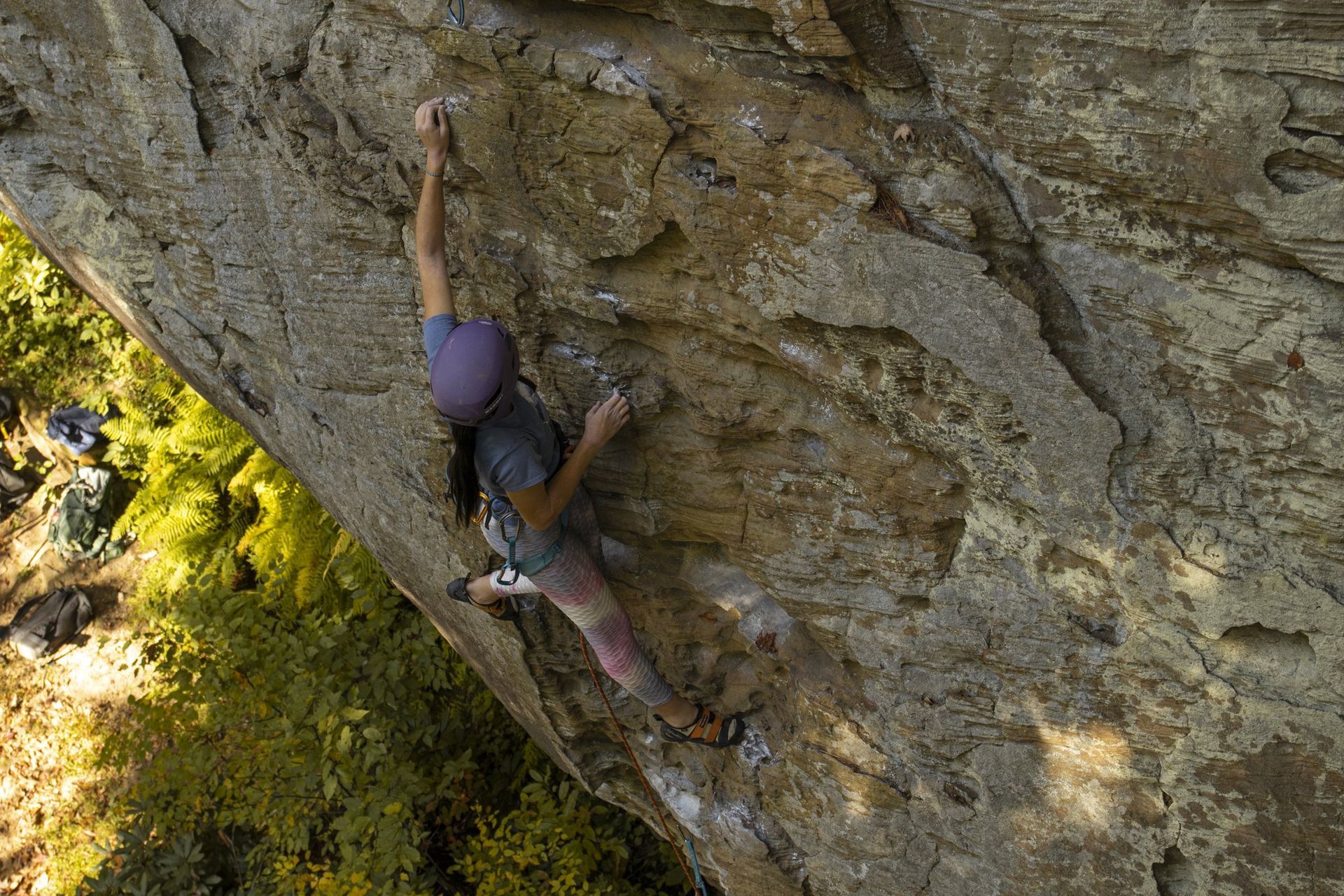
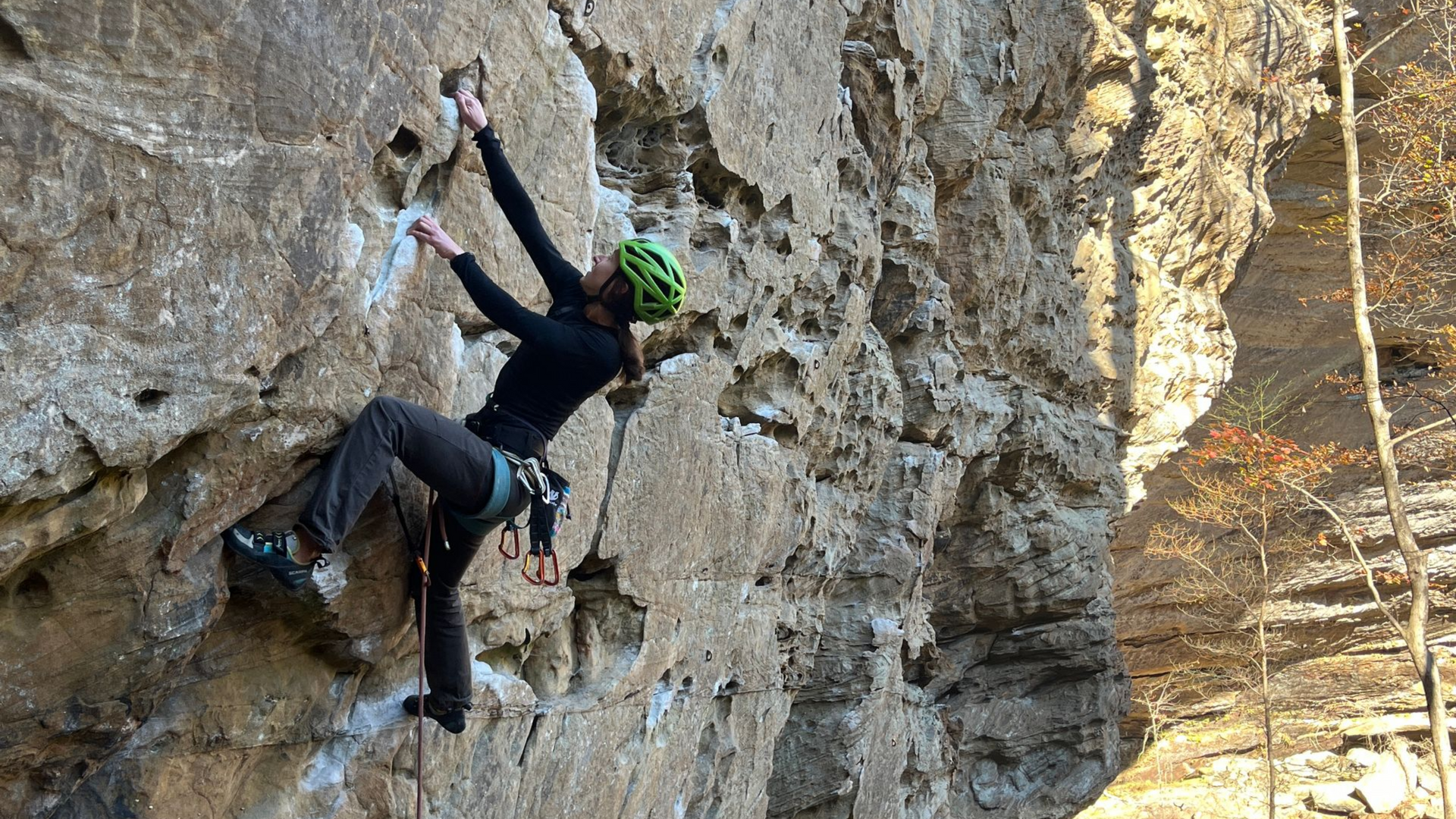
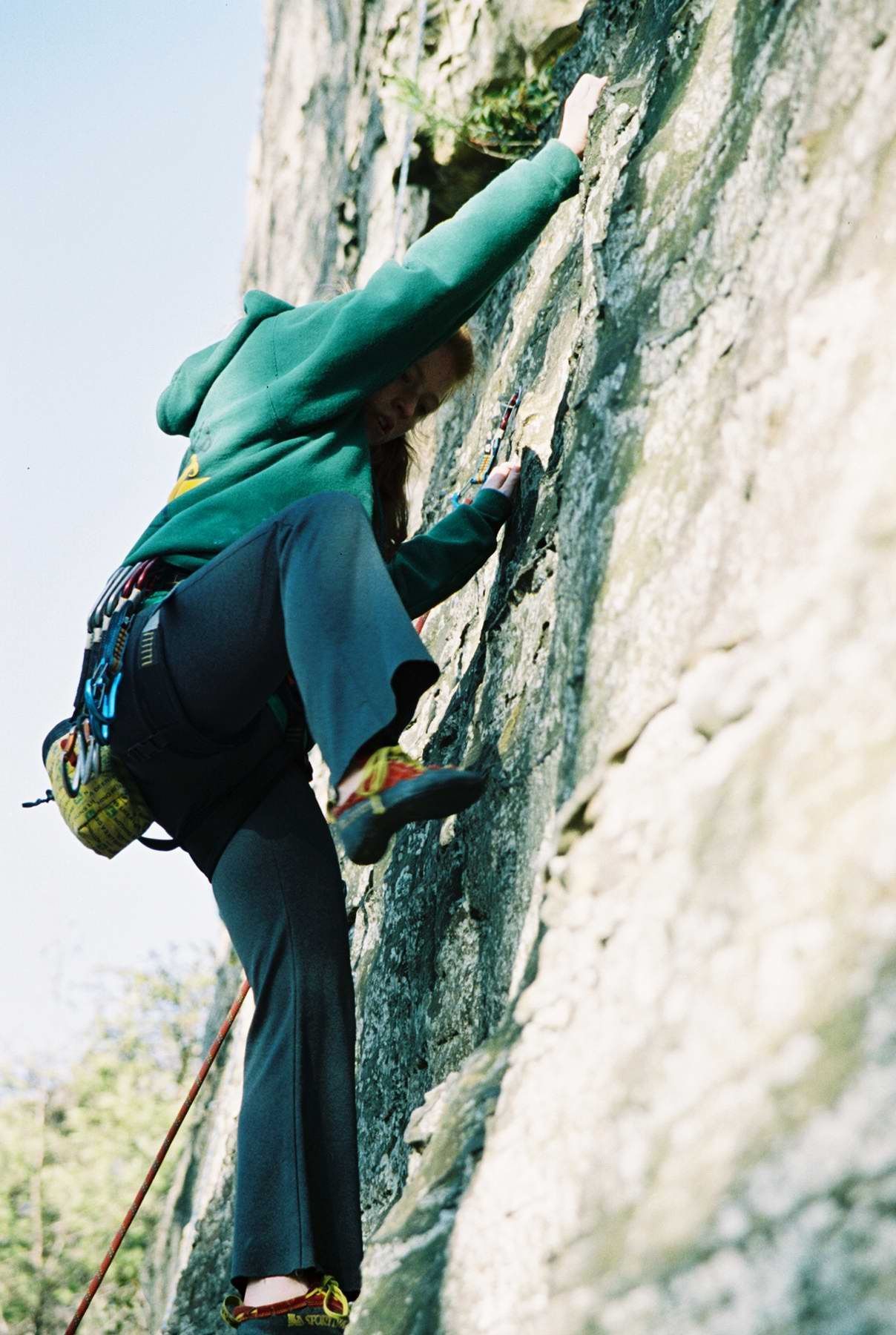
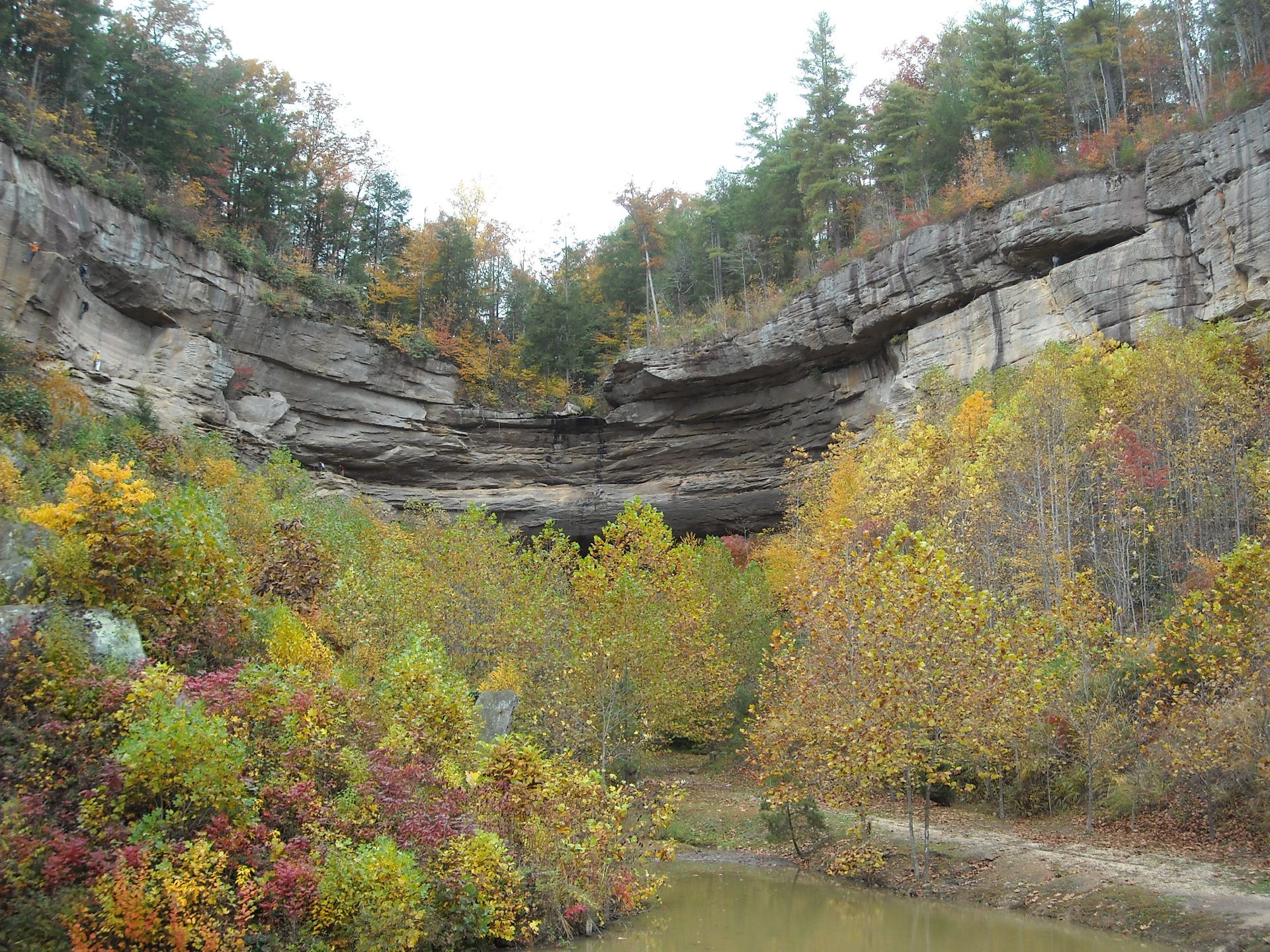
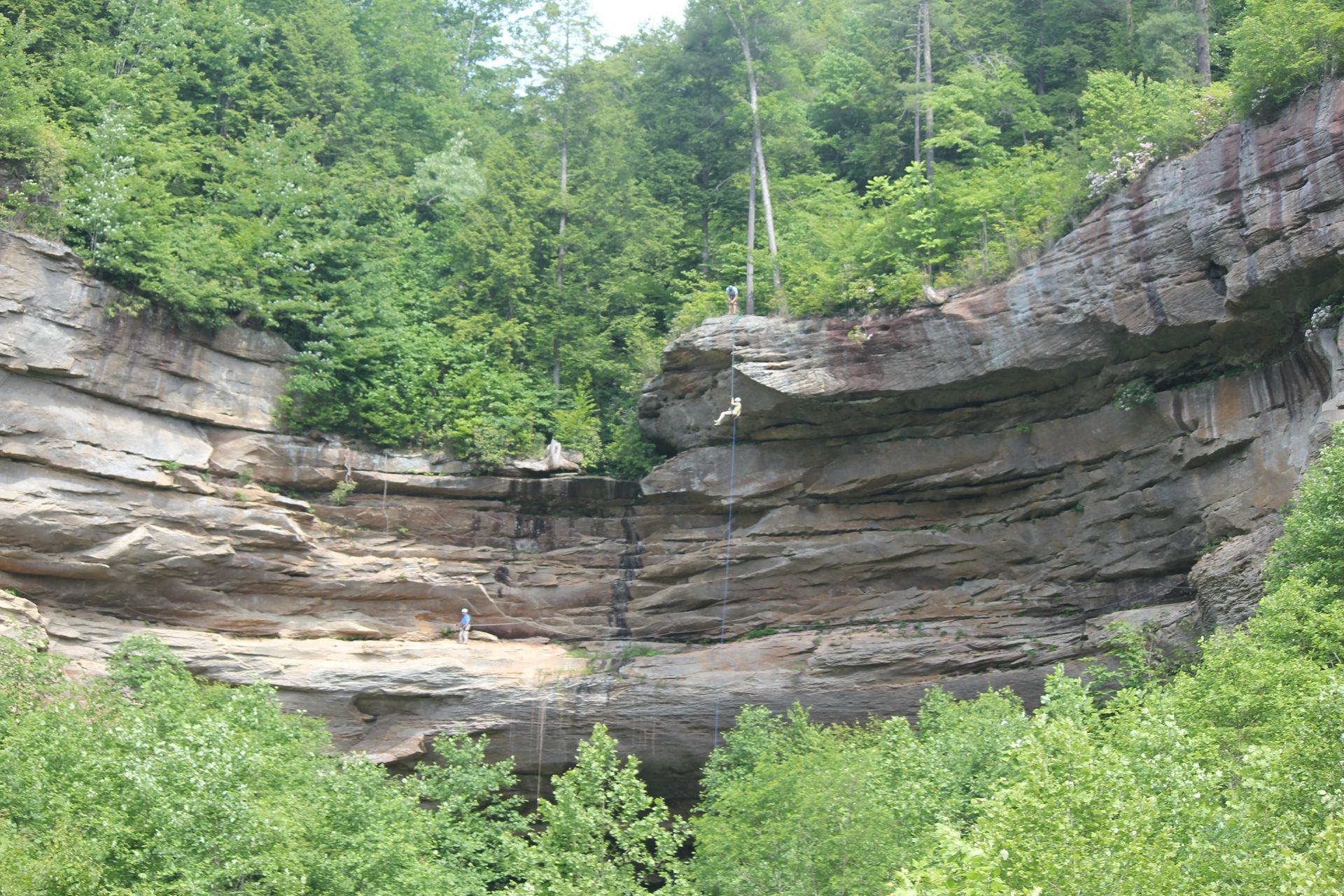
Some of the original, world-class Red River Gorge climbing was right there on our property. Guests would walk up the hill from their cabin and get on it. One of my earliest days out was with Katie Brown, who at the time was one of the best-known female climbers in the world. She and her mom put up Bandolier, a famously stout 5.11a at Torrent.
It was so hard for me. I was hooked immediately.
That's the part of this story I think about most as we come up on twenty-five years. Not the milestone. The fact that I was a kid on a hillside in eastern Kentucky and something got hold of me that I still haven't put down.
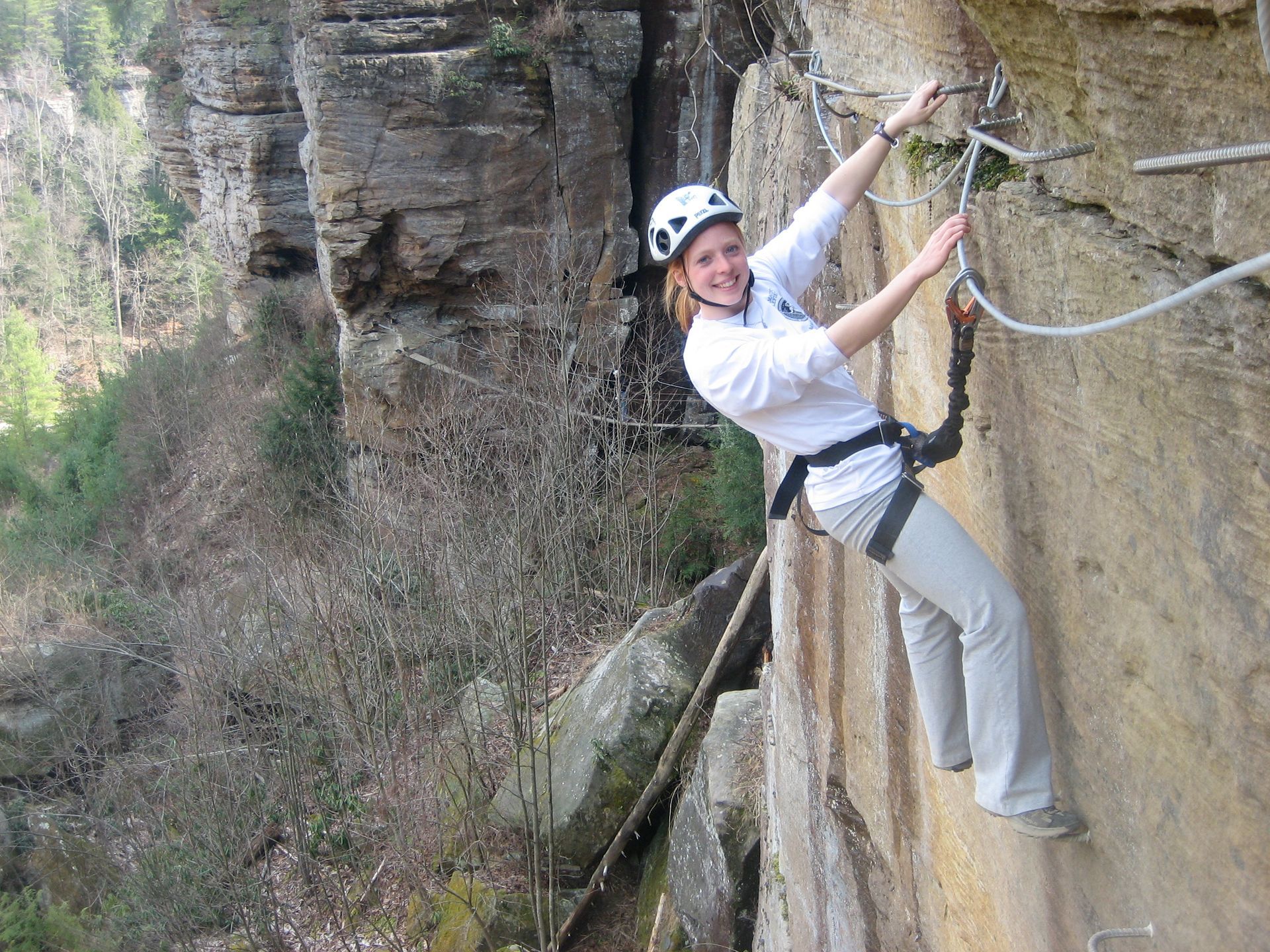
Watching the via ferrata go up
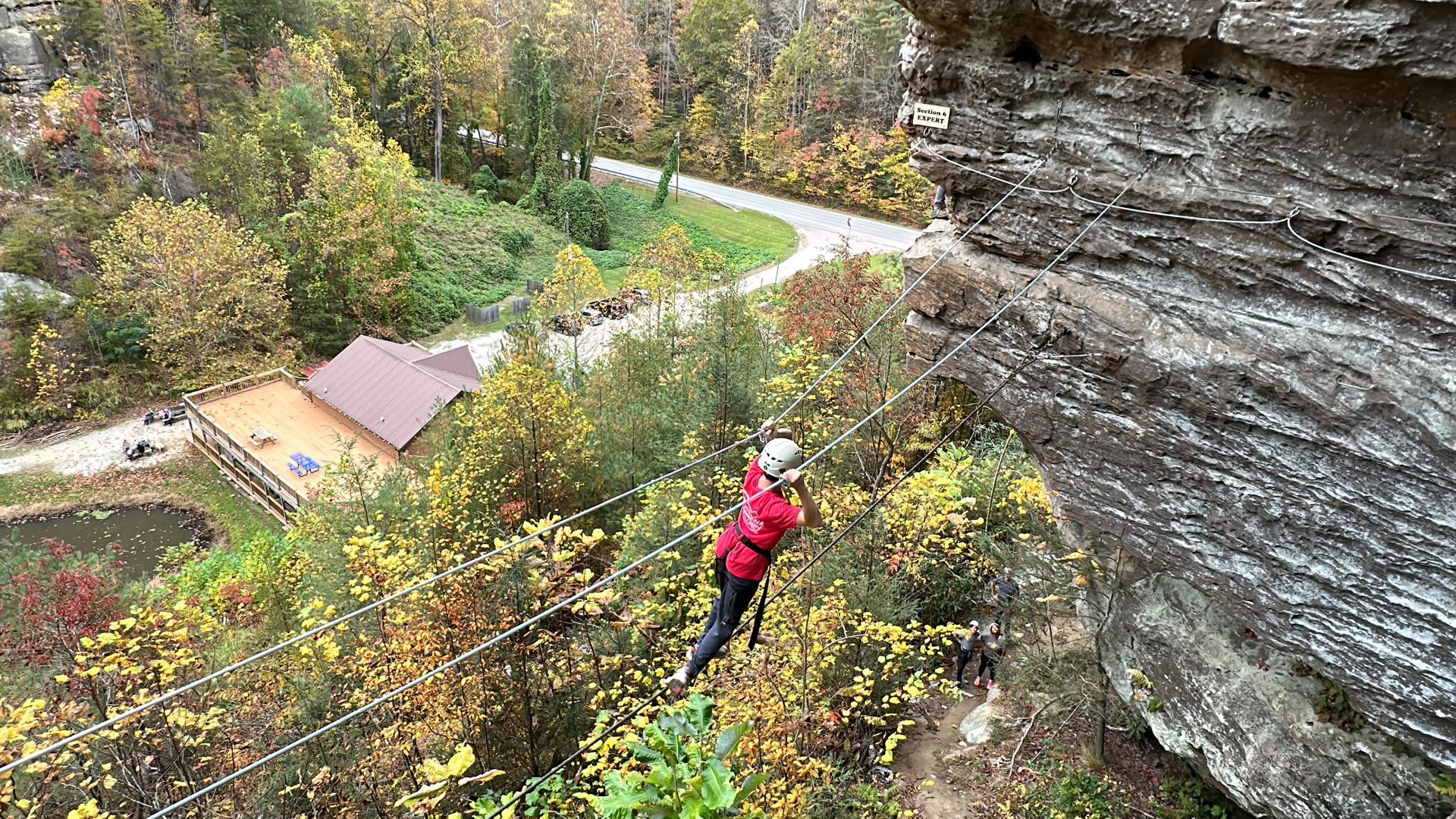
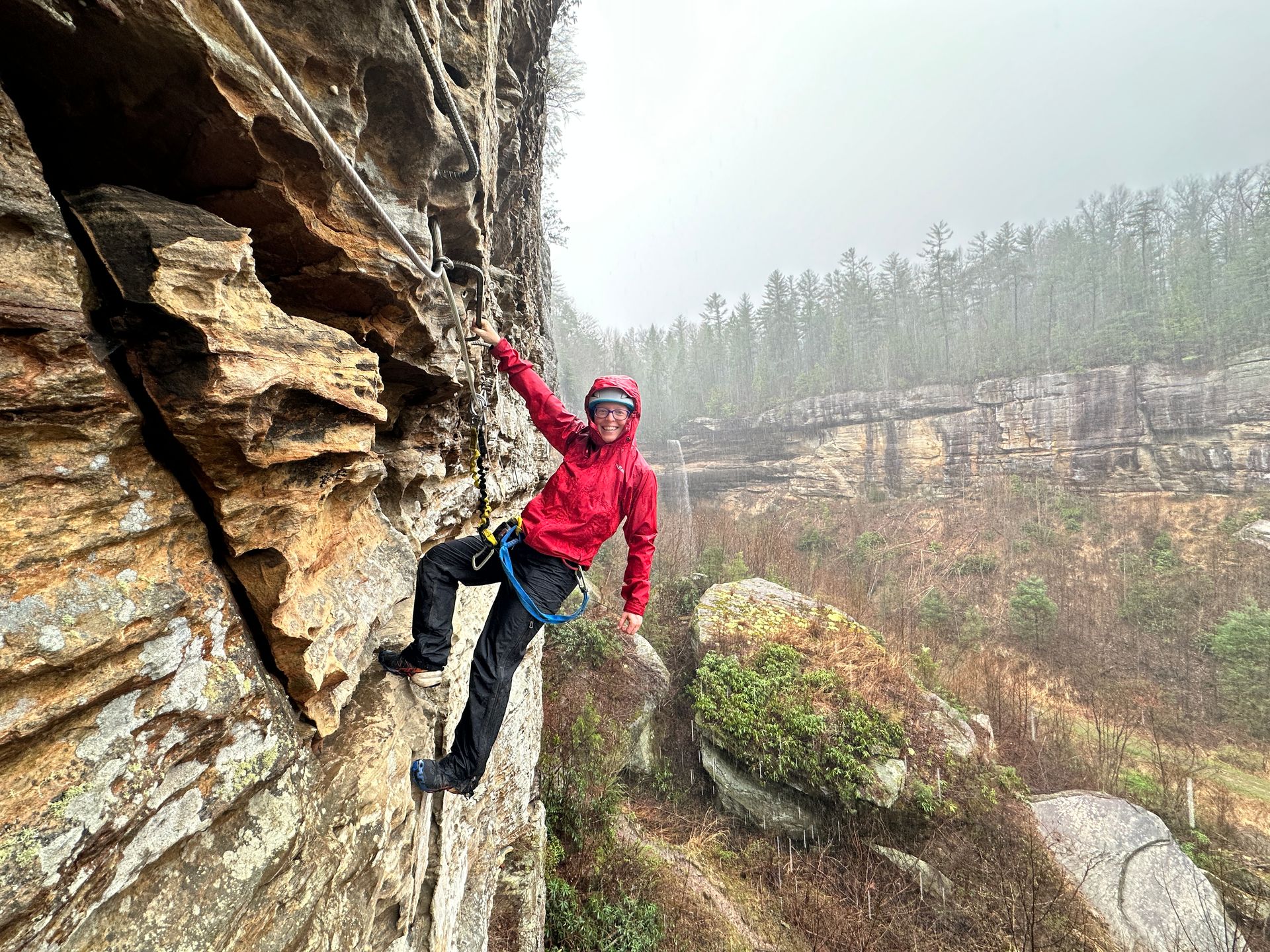
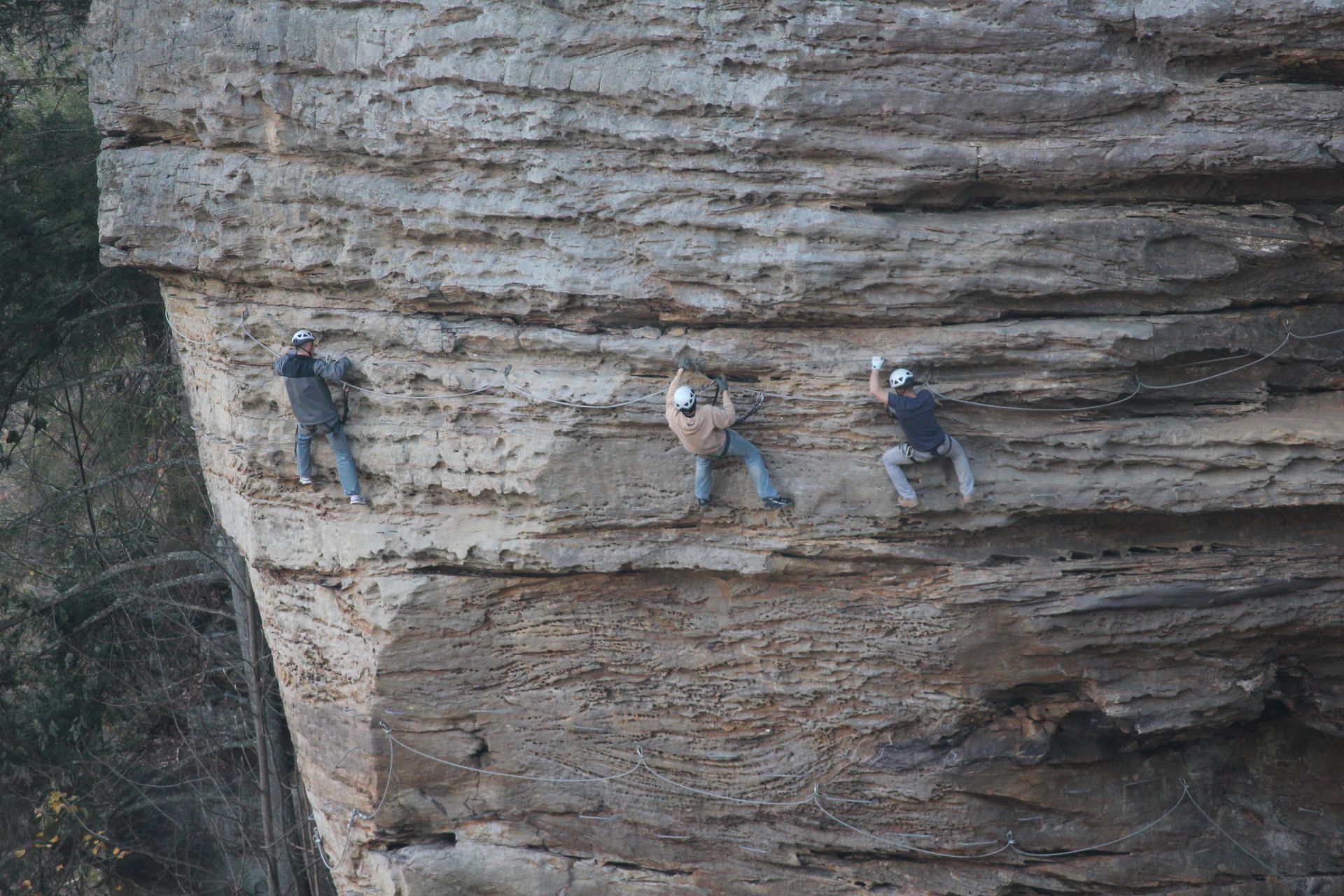
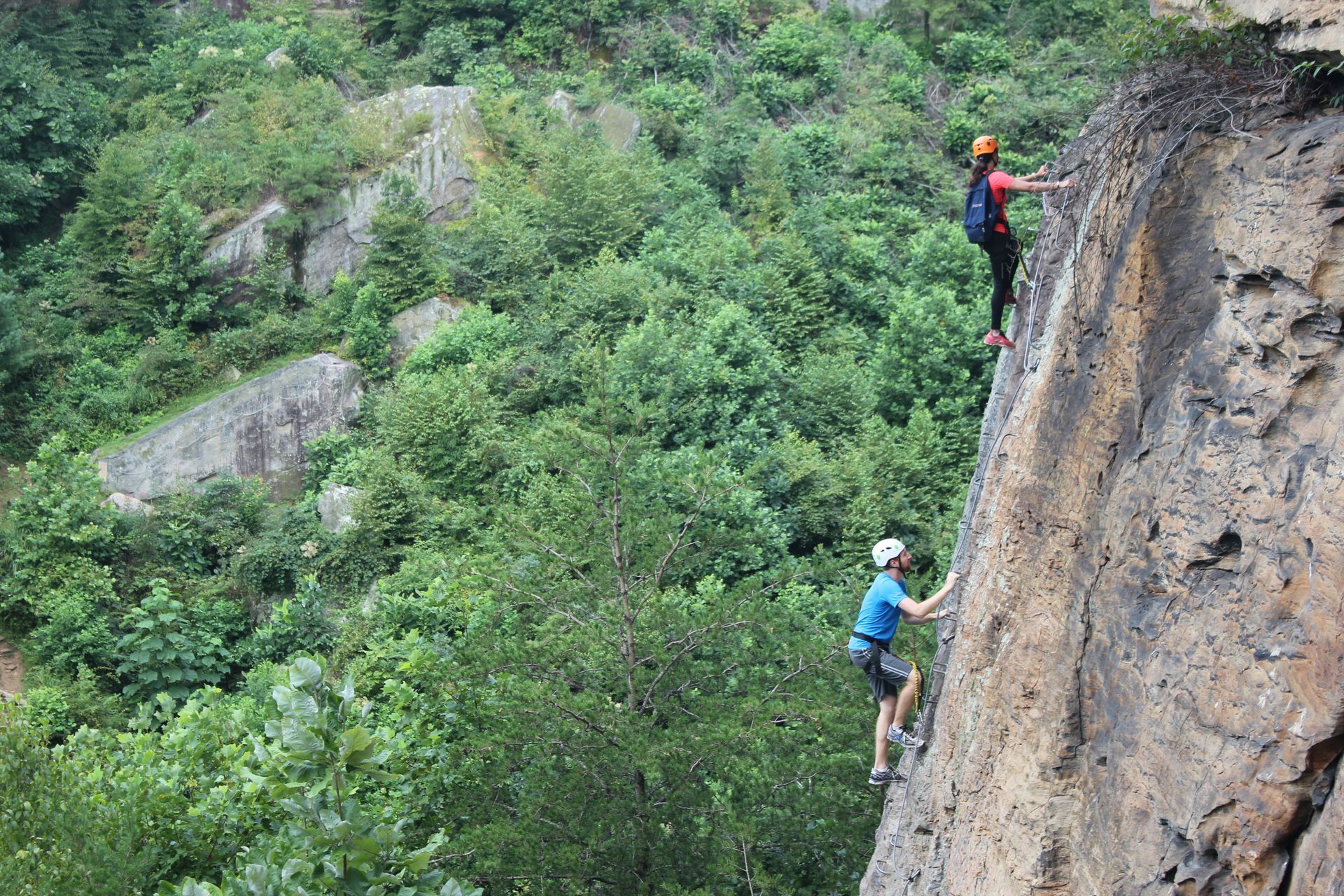
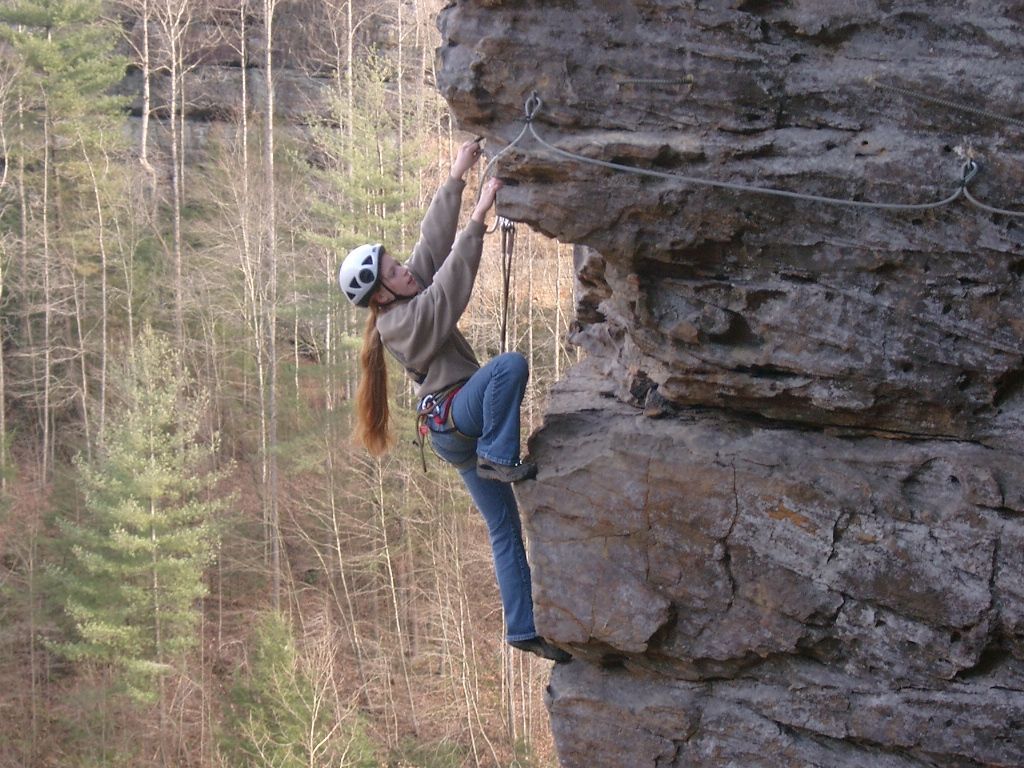
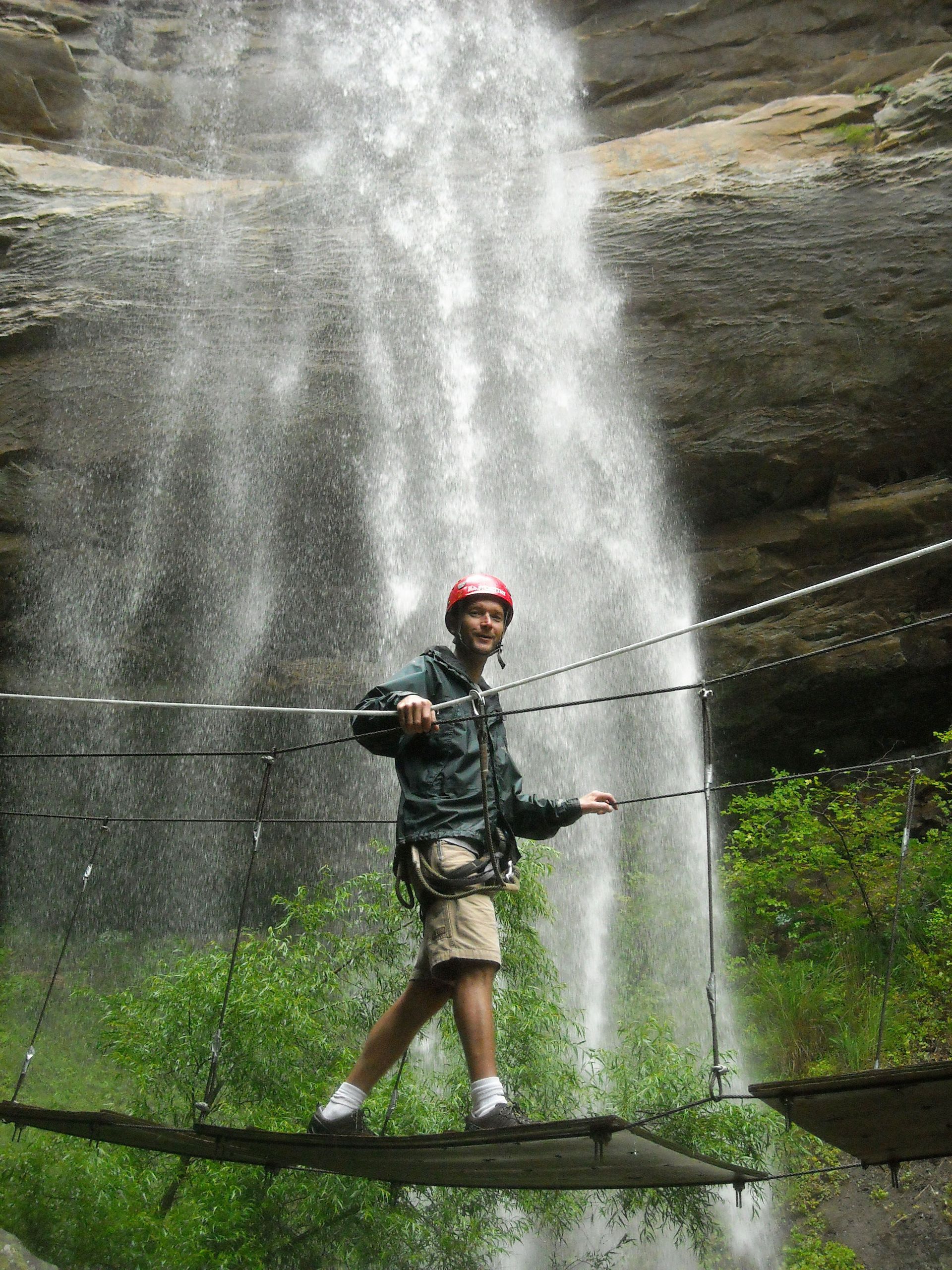
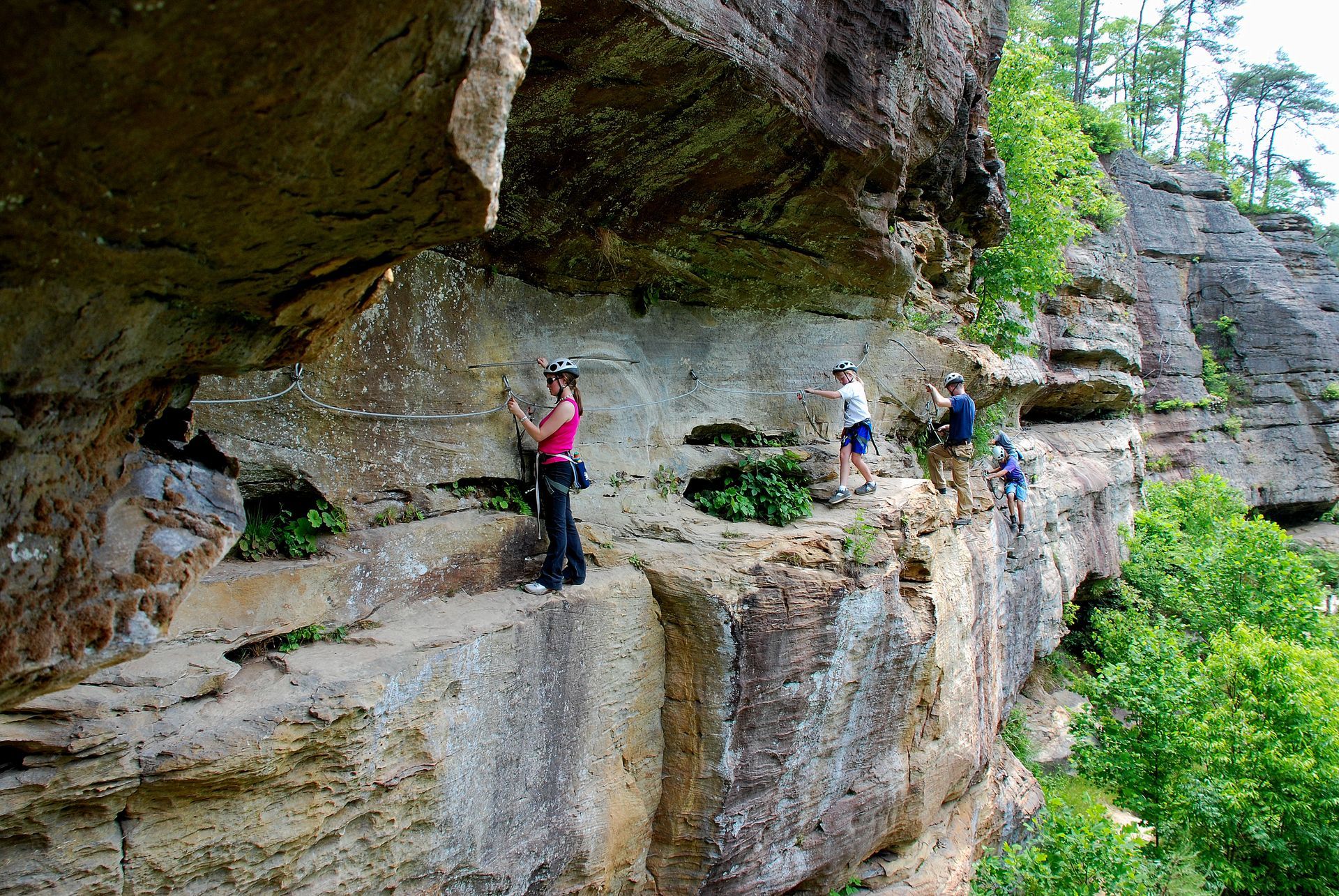
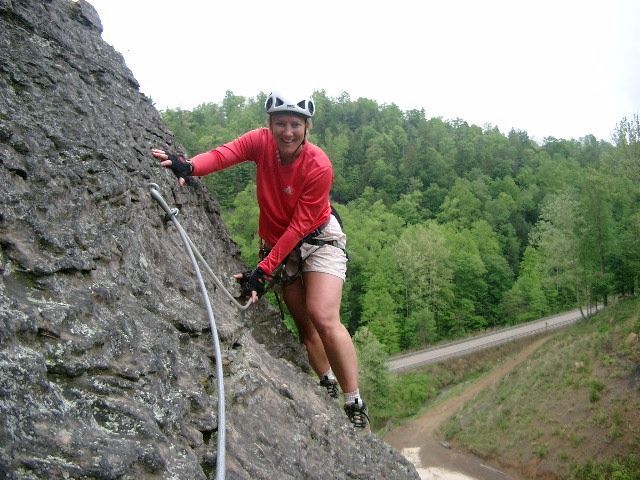
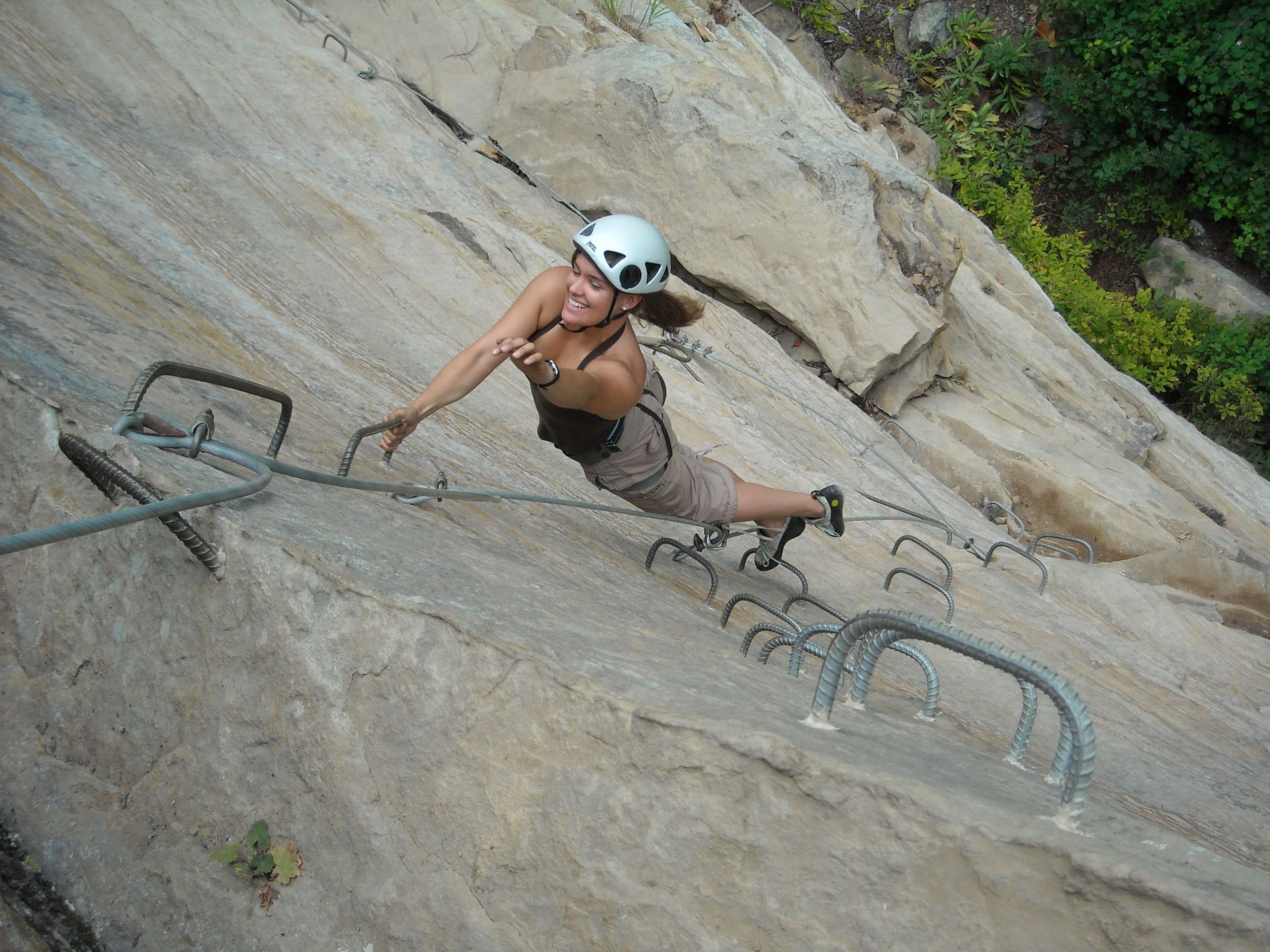
A year or so later, my parents decided to build the first via ferrata in the United States.
I've written about how that came about and how it got built; the guest with the Swiss connection, the six-person French crew, the month of drilling and epoxy and hauling cable up the hillside. What I want to say here is what it was like to be twelve and watching it.
It was thrilling, and I did not understand it.
I didn't understand that nobody in this country had built one. I didn't understand that my parents were investing real money in an activity Americans had no word for and no reason to want. To me it was just another adventure they were getting us into which, honestly, was not unusual for them.
I understand it now. They took a genuine risk, with no proven market and no map, and everything we're celebrating this September started with that decision.
Climbing and business grew up together
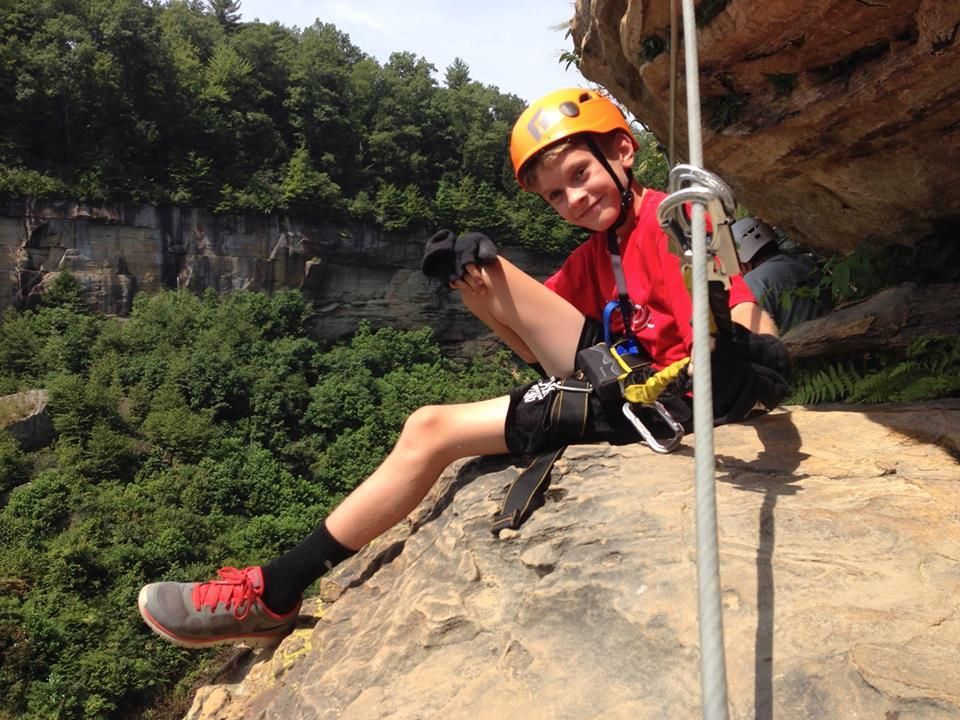
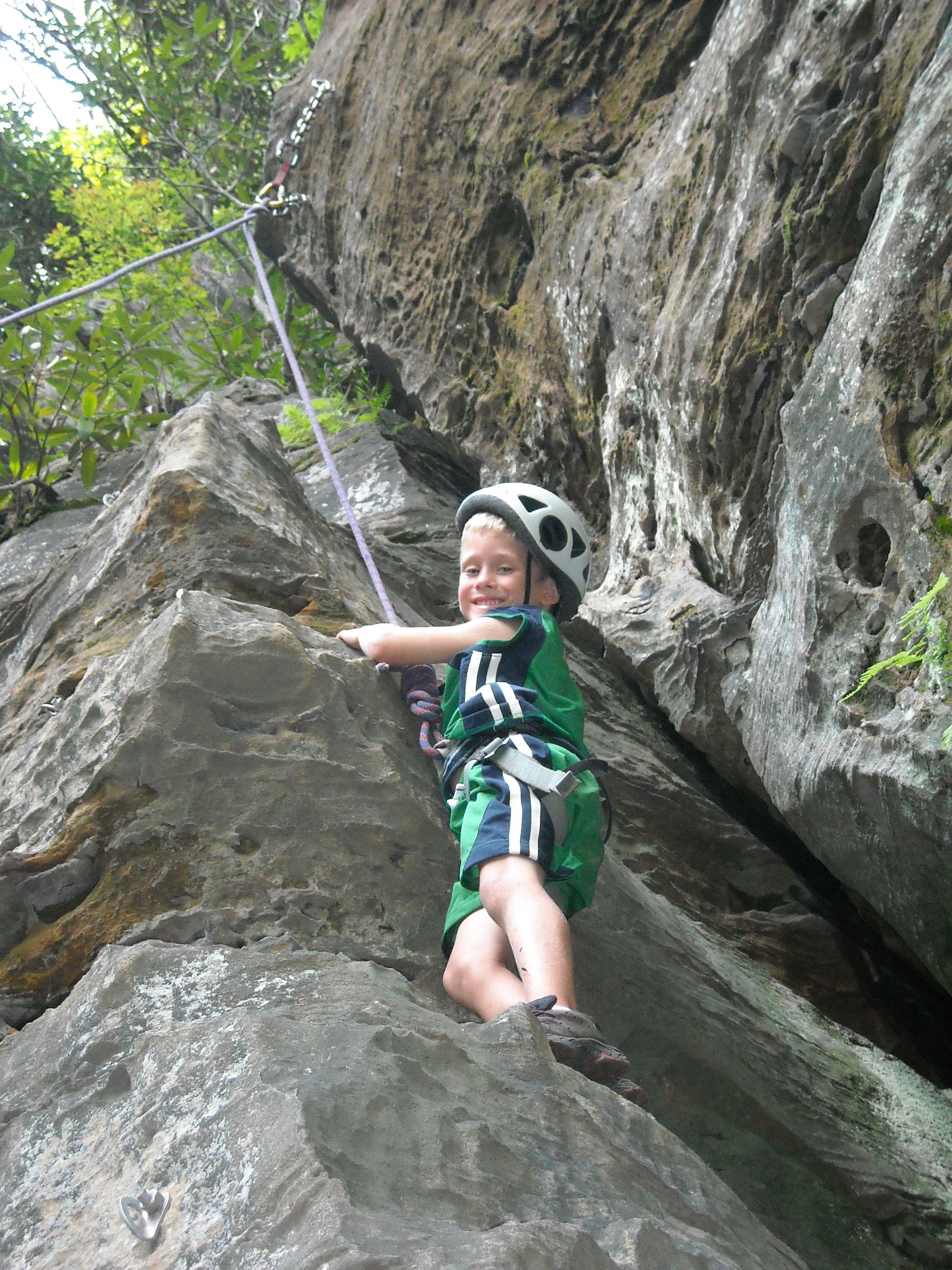
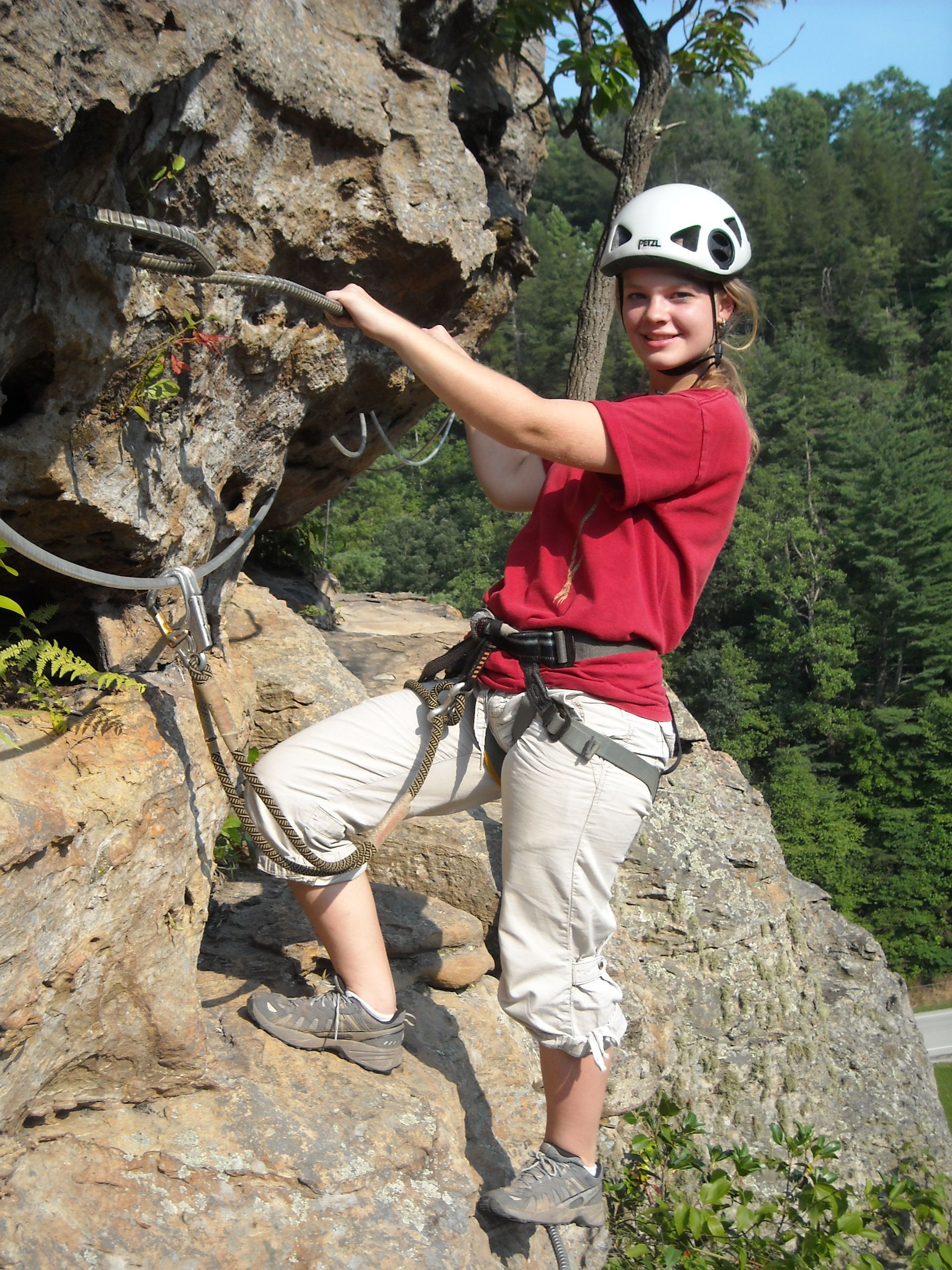
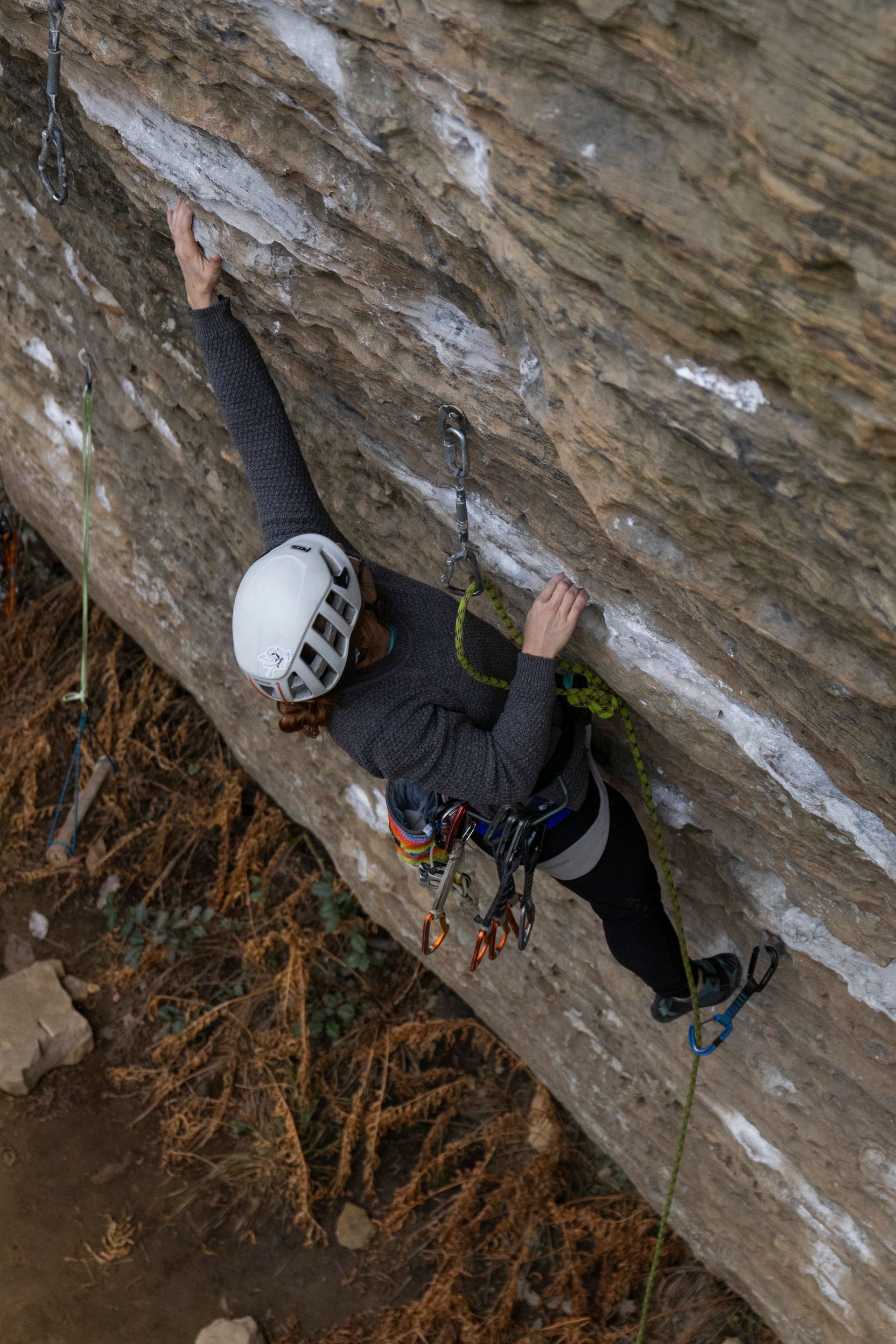
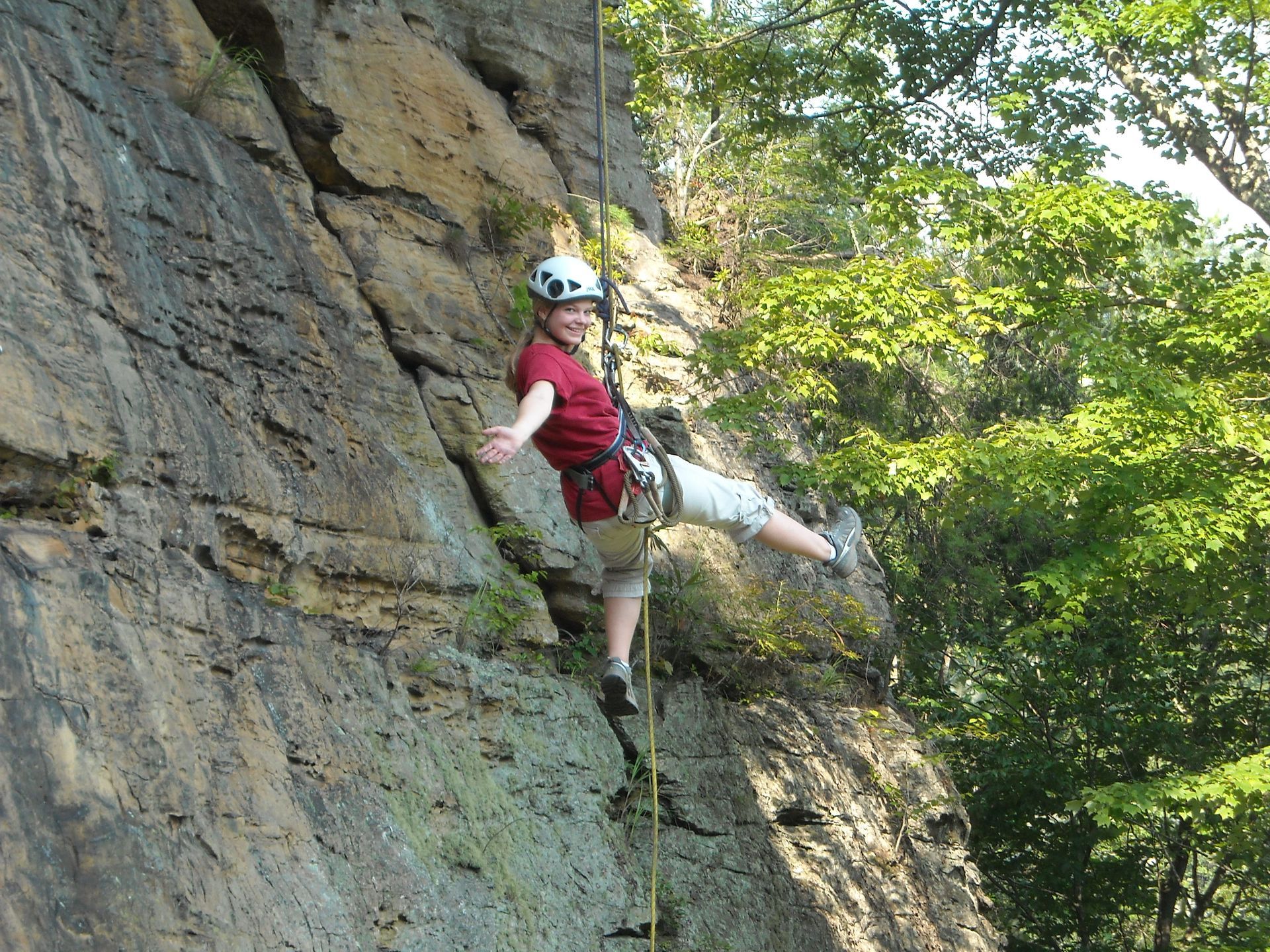
My dad's entrepreneurial brain never really switched off. When I turned eighteen, he signed me up for an AMGA Top Rope Site Manager course. I came out of it a certified climbing instructor and started taking clients out.
I loved it.
I studied business management and finance at the University of Kentucky. During the week, between classes, I worked at the climbing wall at UK's Johnson Center. On weekends I drove home to take people climbing or work on the via ferrata.
In a lot of ways, climbing and business grew up together for me. I've never really had one without the other.
Buying it
I ran the via ferrata and the guide service for eight years before I bought the company in 2017. People sometimes expect there to be a dramatic moment in there. There wasn't one. I'd been fairly confident for a long time that I would eventually buy Torrent.
The truth is that I just love business. I love the challenges and the complexity. I love that nothing stays the same. I love being able to make a decision, see its impact, learn from it, and then make another one.
If I hadn't bought this, I think I would have started something else, or found a role somewhere with enough responsibility to make real decisions and watch what happened.
But this business was already part of me. I grew up here. I had watched the via ferrata being built, learned to climb here, learned to guide here, worked with clients here, and eventually helped run the place.
Buying it felt less like choosing a new direction and more like taking responsibility for something I already cared about and then figuring out what I wanted the next version of it to be.
What I changed, and what I didn't
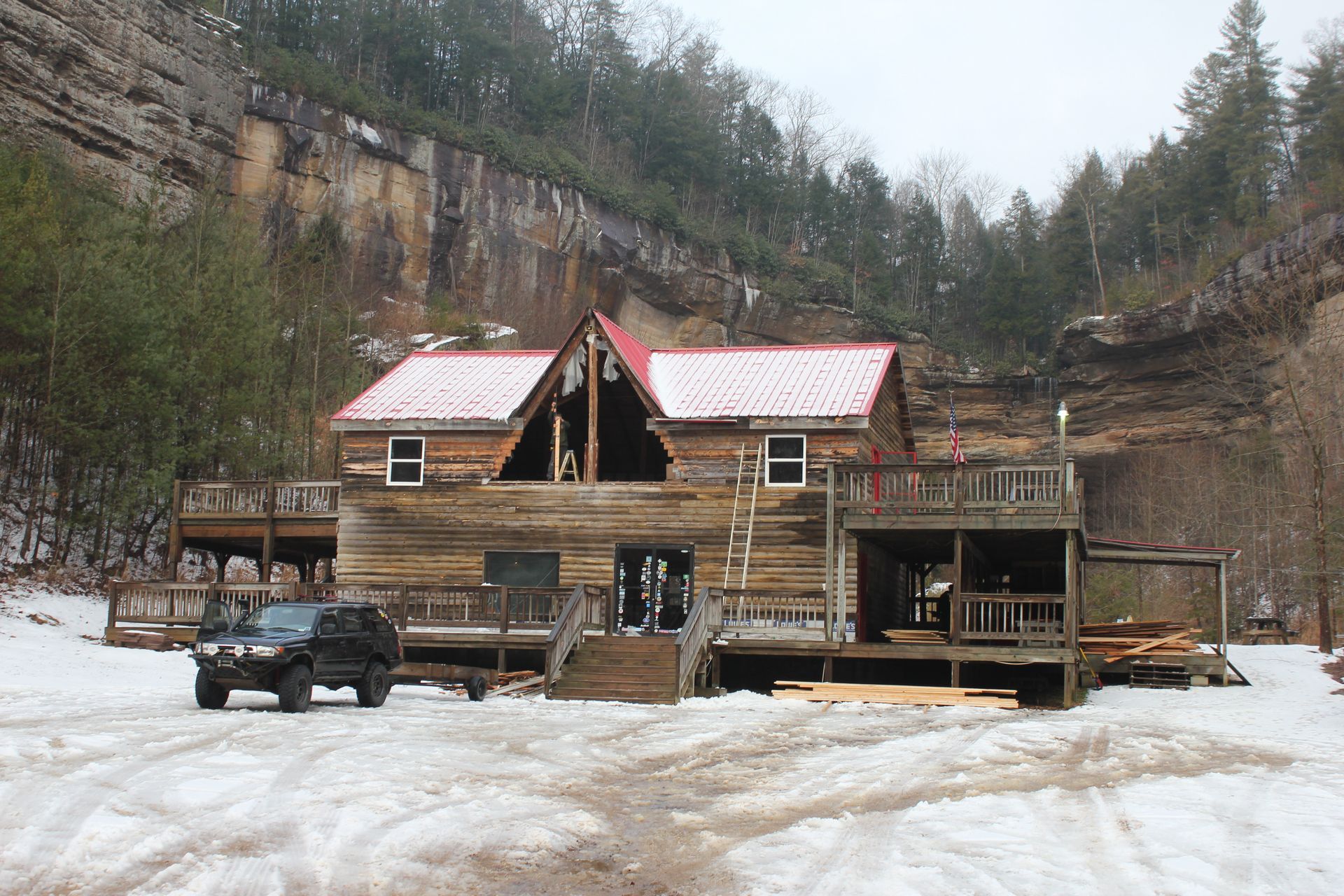
The most visible change was the name. Torrent Falls Climbing Adventure became Southeast Mountain Guides.
What I deliberately kept was the attention to detail and the level of care and safety that Torrent had always operated with. I never wanted growth to come at the expense of that, and I still don't.
But the care and dedication in how we treated clients was already there. What I wanted was to take it deeper. That's where our first core value came from:
Authentic Connection.
My heart has never been in simply turning the biggest numbers or making the largest profit possible. Don't misunderstand me, I love business, and profit matters. Profit keeps all the gears running smoothly. Financial breathing room lets you inhale a little more deeply, look farther ahead, and make the next big decision well.
But my passion has always been meeting people and caring for them.
That's a large part of why this particular business means so much to me. Climbing puts us in an environment where we have
voluntarily chosen to be challenged; physically, mentally, sometimes emotionally. There's so much a person can learn about themselves in that space.
If our team can create an environment where we see people, challenge them, comfort them when they need it, and help them progress, what an incredible opportunity that is.
Three times I nearly walked away
I want to be honest about something, because a twenty-fifth anniversary post that reads like an unbroken victory lap wouldn't be true.
There have been three times in my years of running this business when I came very close to stepping away. It was simply too difficult and too taxing.
All three times, what pulled me back was the team.
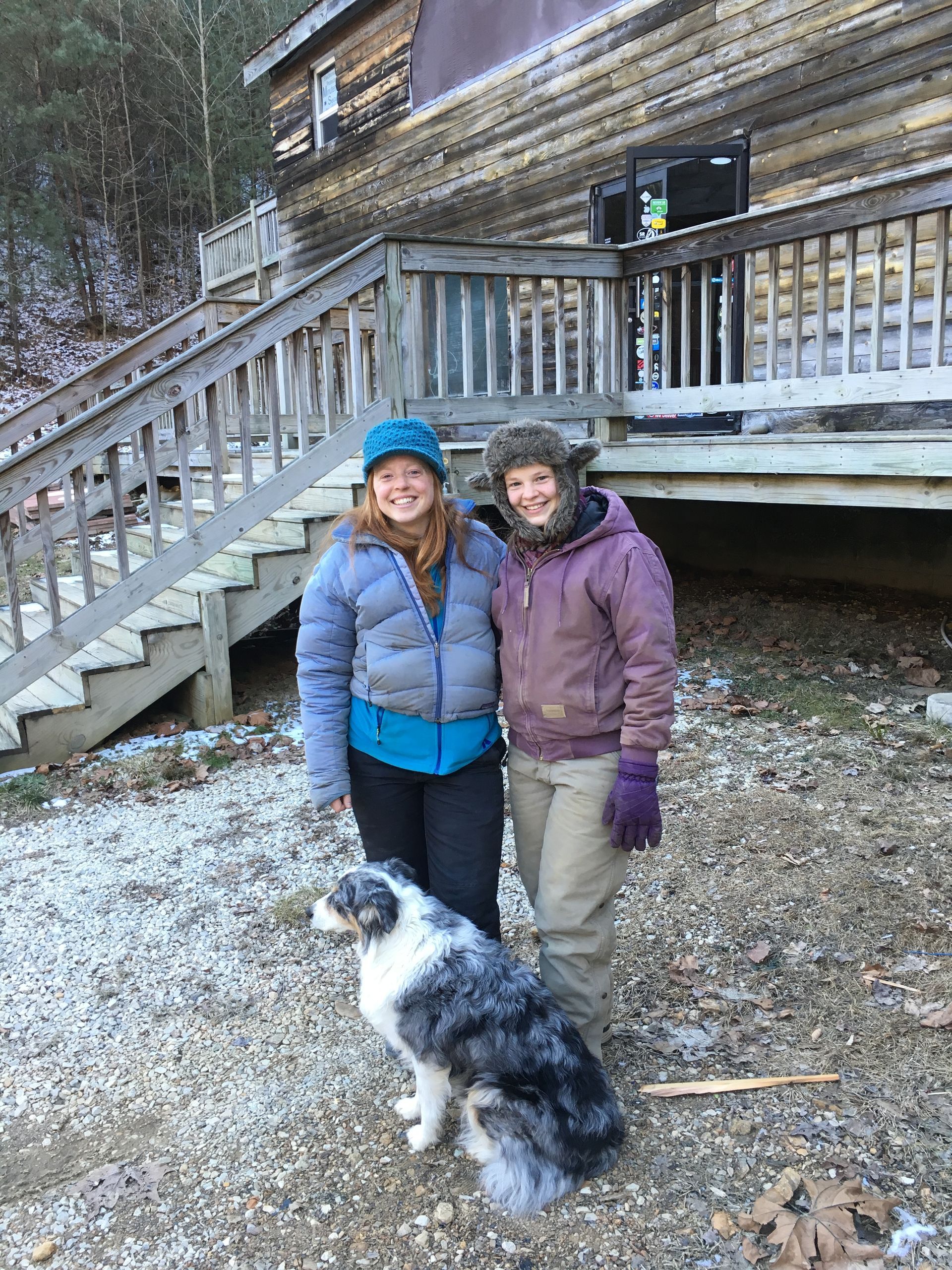
I get so much life from working with an incredible group of people. Those teams haven't stayed the same, of course, people come and go, and that's how it should be. But managing a small team has been one of the greatest sharpening tools in my life, on the occasions when I've allowed it to be.
The people I've worked with have challenged me, supported me, frustrated me, taught me, and helped me grow.
It has been a long journey, and it hasn't been easy. I've made gut-twisting mistakes, and I'm sure I'll make more. Those can leave a sour taste if you let them become the focus.
They aren't the focus.
I'm deeply grateful for the opportunity God has given me to lead people, even a relatively small number of them in a remote part of eastern Kentucky.
The hardest part nobody sees
If you asked me what's genuinely hardest about running this business, I don't think I'd say weather, or insurance, or a quiet January.
I'd say communication.
It is surprisingly difficult to tell another person what you think, what you've seen, what you've processed, what you've learned. It requires vulnerability. And it's very hard to get exactly right. You can know precisely what you mean and still have someone receive something completely different.
Communication touches nearly everything: writing a job description, interviewing, training someone new, giving feedback, working alongside a person, talking with a client, writing marketing copy, setting expectations, explaining where we're going and why.
I've learned that good intentions don't automatically equal good communication. What you send and what the other person receives are not always the same thing.
Twenty-five years in, I'm still working on it.
What the Red has gained, and what it's lost
The Gorge is not the place it was in 2001, and I want to be straight about both halves of that.
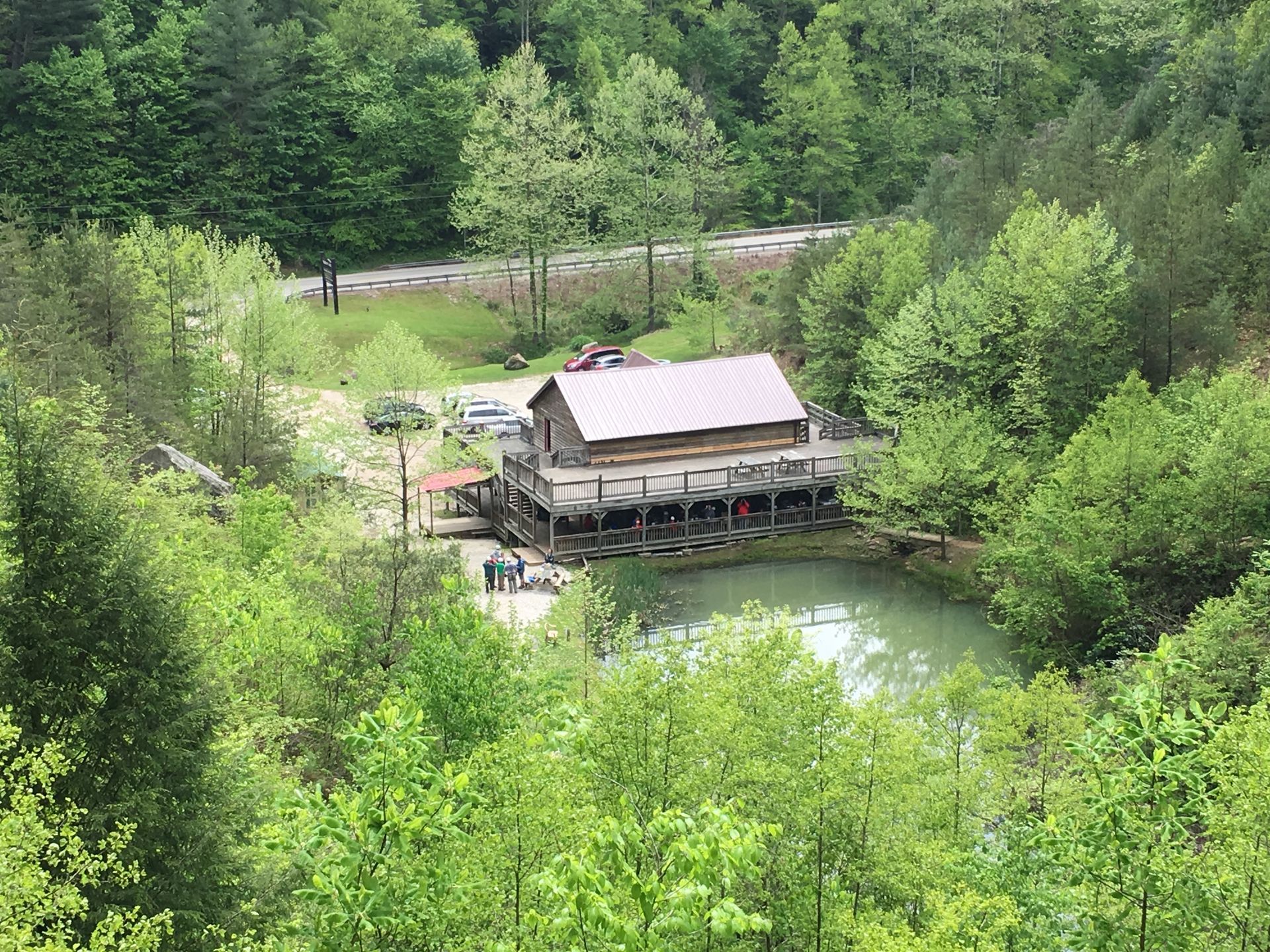
Infrastructure has grown and taken root here, and that's genuinely good. So much of our local economy runs on tourism, and tourism here used to be brutally seasonal. Winter could be dead quiet, which made it very hard for a small business to survive a full year. Now more businesses can stay open year-round, and visitors come in seasons that used to feel empty. There's more lodging, more food, more to do. That means jobs, and it means local businesses have a real chance at building something that lasts.
But I do miss how quiet the Red once was.
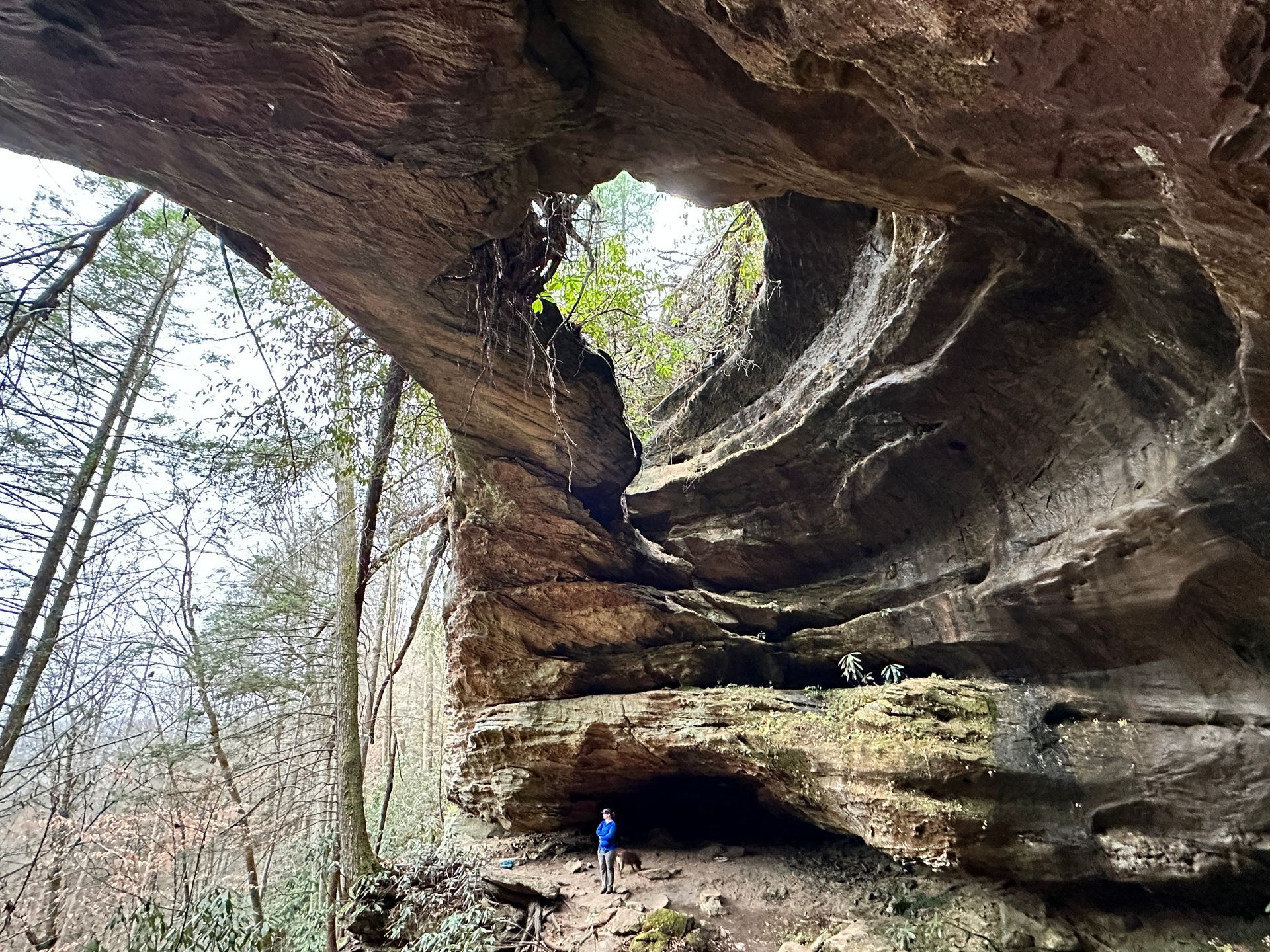
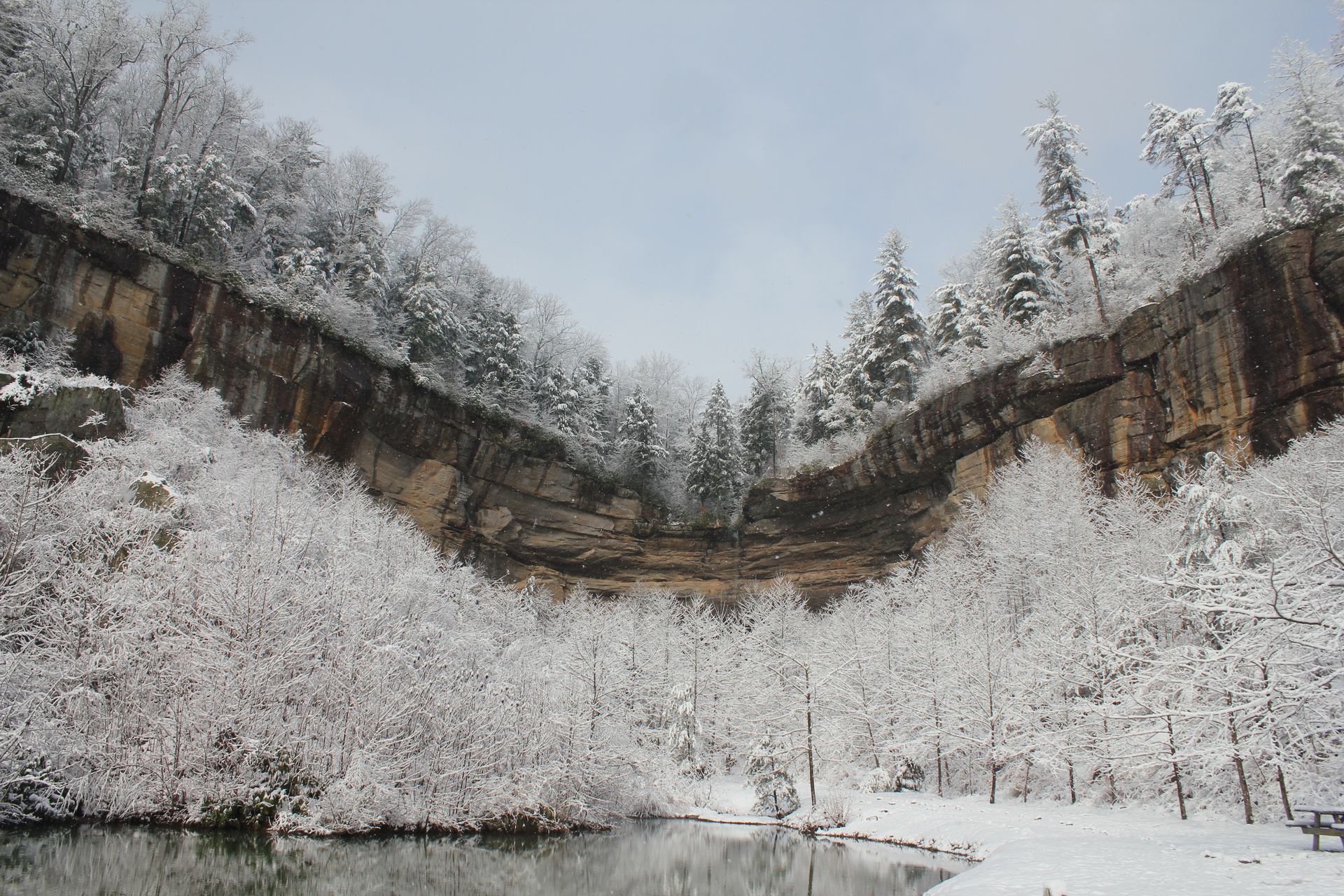
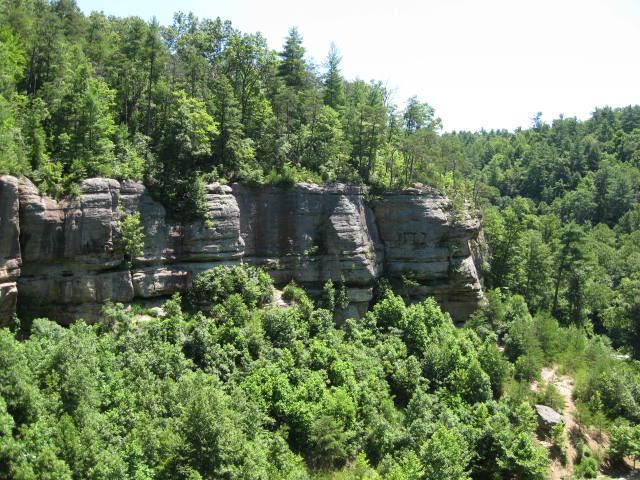
It is still wild. Still lush green forest, cliffs, creeks, hollers, places you can disappear into for a while. But there are many more people here than there used to be, and roads and trailheads and crags can feel crowded in a way they didn't when I was young.
There's a real tension in that, and I don't think it's dishonest to hold both sides. I'm glad more people get to experience the wonder of this place. I also know that heavier use changes a place.
The challenge for the next twenty-five years is figuring out how we welcome people here
without loving this place to death.
What twenty-five years has taught me
If I had to reduce it to one thing:
The business you're building is also building you.
I grew up alongside Southeast. I was a kid when the via ferrata went in. I became a climber, then an instructor, then a manager, and eventually an owner. At every single stage, I thought I knew more than I actually did.
Business has a funny way of exposing you. It shows you where you're impatient, where you're afraid, where you avoid hard conversations, where your ego gets involved, and where you need other people.
It also gives you the chance to become more resilient, more generous, more thoughtful, more courageous.
I would not be the person I am today without this place, this business, and the people who have passed through it.
What I hope for the next twenty-five
I hope the business is still here, and I hope it's different. I hope it has learned and changed and grown in the right ways. I hope people are still climbing, still learning, still choosing to challenge themselves. I hope we still have an incredible, caring, passionate team, and that we've grown enough to offer those people bountifully more than we can today.
I hope the Red is still the lush, green, wild forest I know and love. And I hope the communities around it are still strong, mighty, ridiculously friendly, and eager to serve.
Thank you
Twenty-five years doesn't happen because of one person.
My parents — thank you for not being afraid to start something so unusual and unproven. There was no market for a via ferrata in the United States. You took the risk anyway.
The French crew who built it in a little over a month, and then went climbing on their days off.
Every person who has ever worked for Torrent or Southeast — there are far too many of you to list, but you had an impact. This business carries pieces of the people who have invested themselves in it.
I especially want to name several people who served in leadership roles and gave more of themselves than any job description could capture. Listed alphabetically:
- Amy Taylor
- Connor Mullady
- Daniel Wilkes
- Gannon Nawojczyk
- Jarek Voyles
- Justin Poe
- KV Kalra
- Travis Sapp
And the countless clients, climbers, community members, friends and supporters who trusted this little climbing business in eastern Kentucky. We would not be here without you.
And to the person standing at the bottom of the first ladder, harness on, quietly wondering whether they can do it:
Start whenever you're ready.
Try just the next step. You can step back if you need to.
And let's do it together.
The via ferrata above Torrent Falls opened on 1 September 2001. It is open and guided all season. If you'd like to read how it was built, that story is here.