
What to Wear Rock Climbing for the First Time (and What to Skip)
One of the most common questions we get from first-time climbers is some version of "what do I wear?" And it's a fair one since climbing looks like it might require special gear, and nobody wants to show up dressed completely wrong for their first outdoor experience.
The good news is that you probably already own most of what you need. Climbing clothes don't have to be expensive or specialized, they just need to hit a few key criteria. Here's what actually works, what to leave at home, and a few things that will genuinely make your day more comfortable.
The One Rule That Covers Almost Everything
If you remember nothing else from this post, remember this:
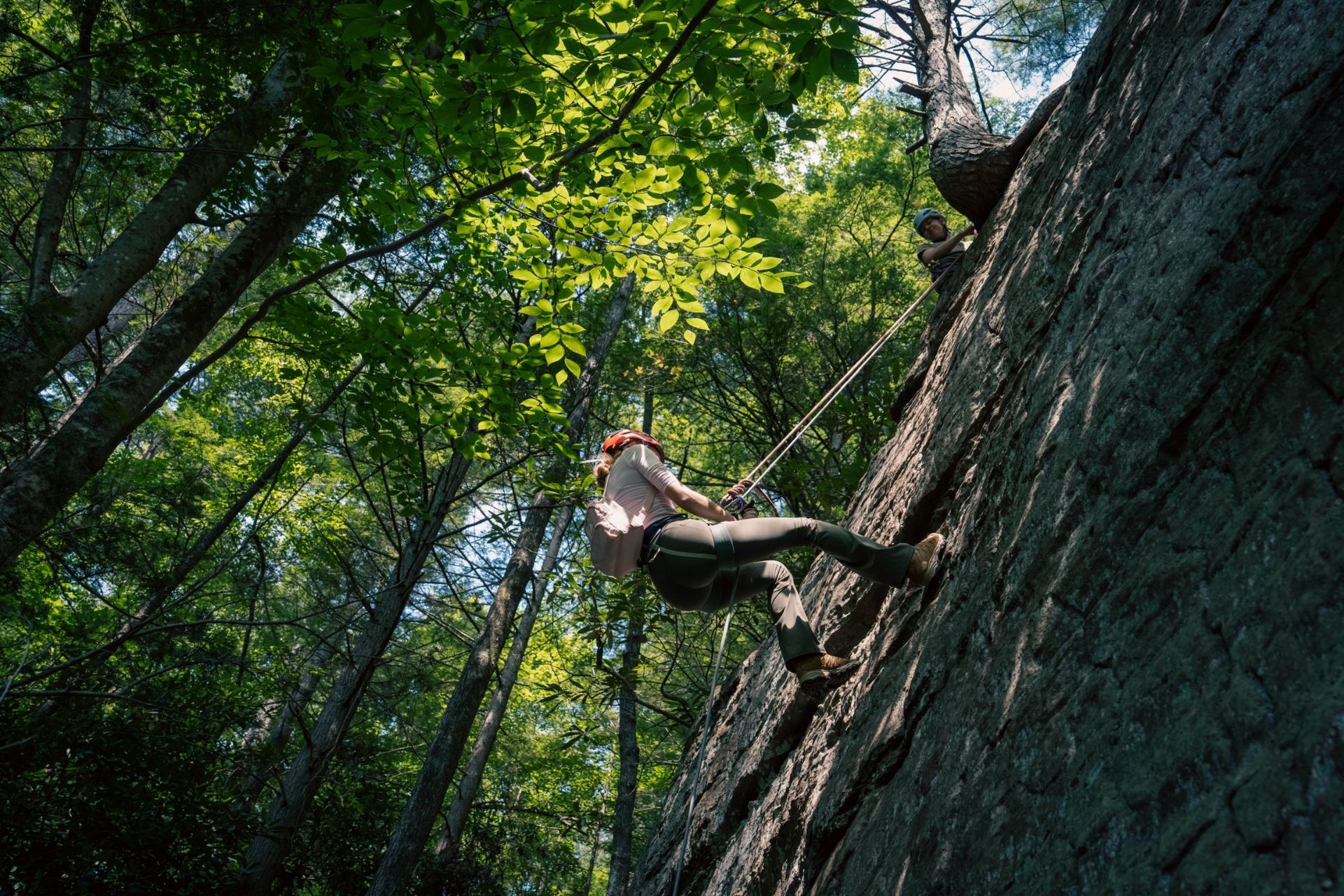
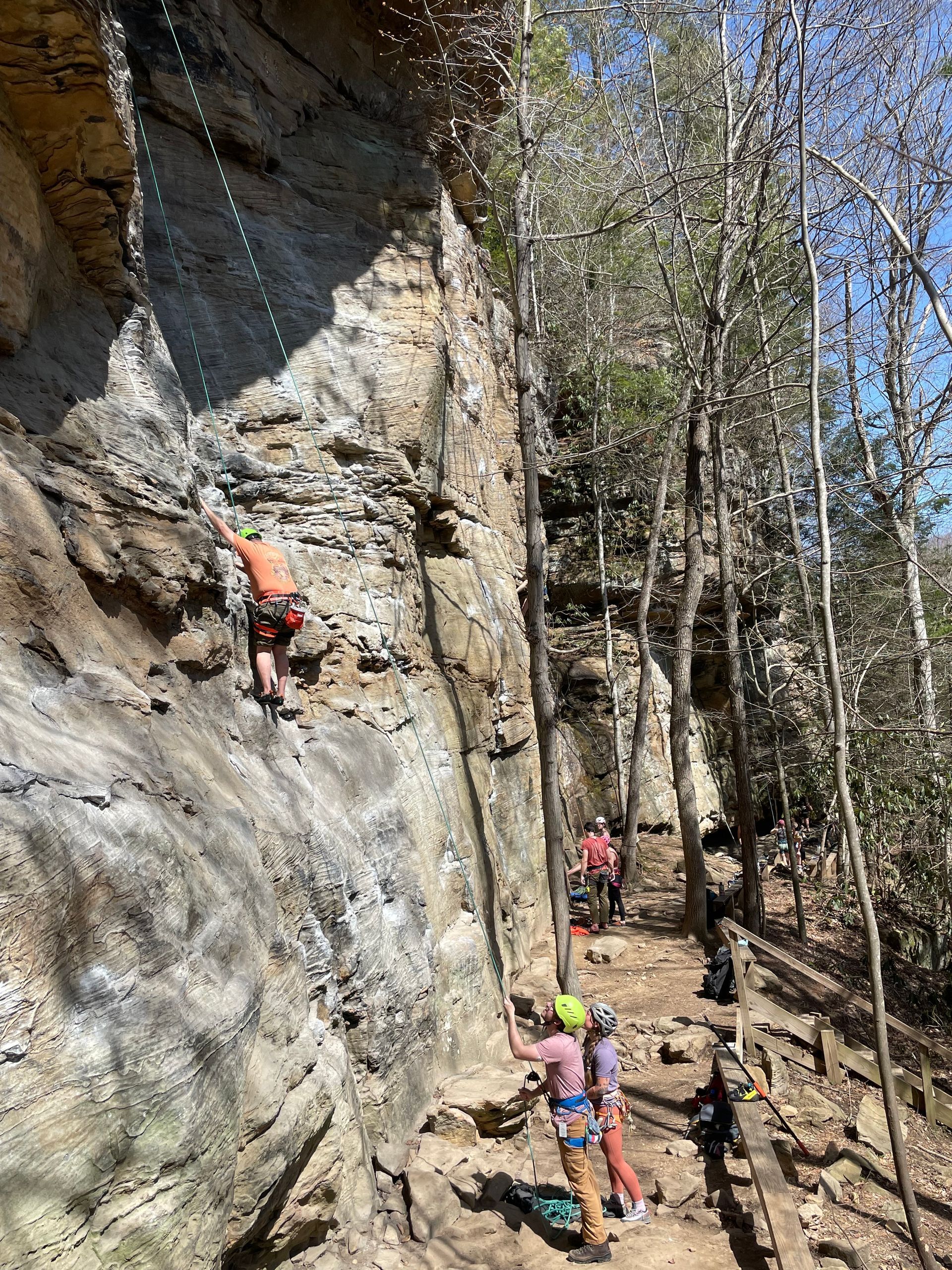
dress like you're going for a hike in the woods, not like you're going to the gym. Outdoor climbing is a physical activity that happens in an outdoor environment. You'll be walking trails, crouching at the base of routes, sitting on rocky ground, and moving in ways that require real range of motion. Gym clothes are often fine, but remember that climbing outside is dusty, rocky and involves more obstacles than in the gym.
You'll also be wearing a harness, which wraps around your waist and thighs. Anything too baggy or layered in that area gets uncomfortable quickly. Keep it simple, keep it practical, and you'll be fine.
What to Wear: The Breakdown
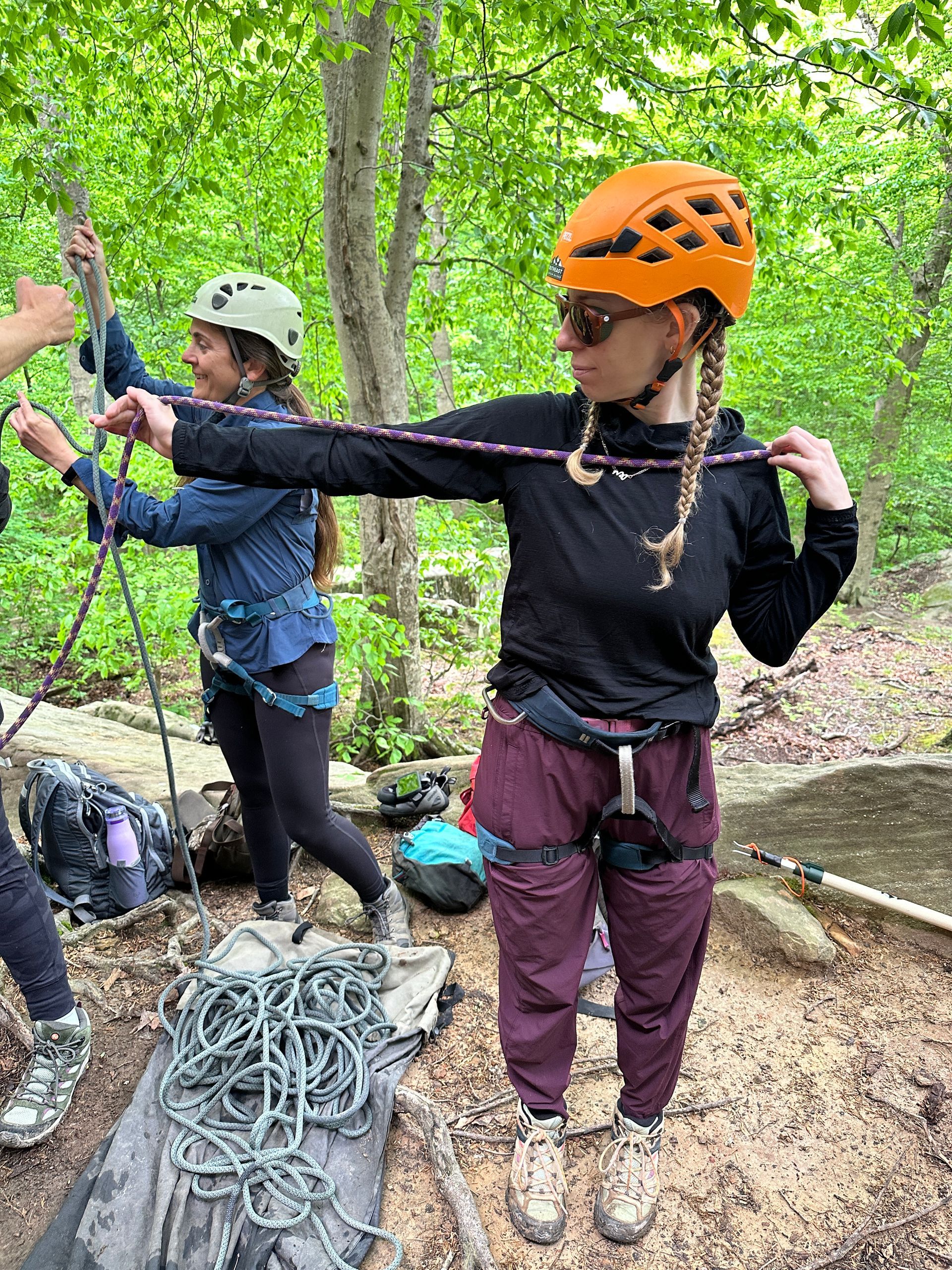
Top Half
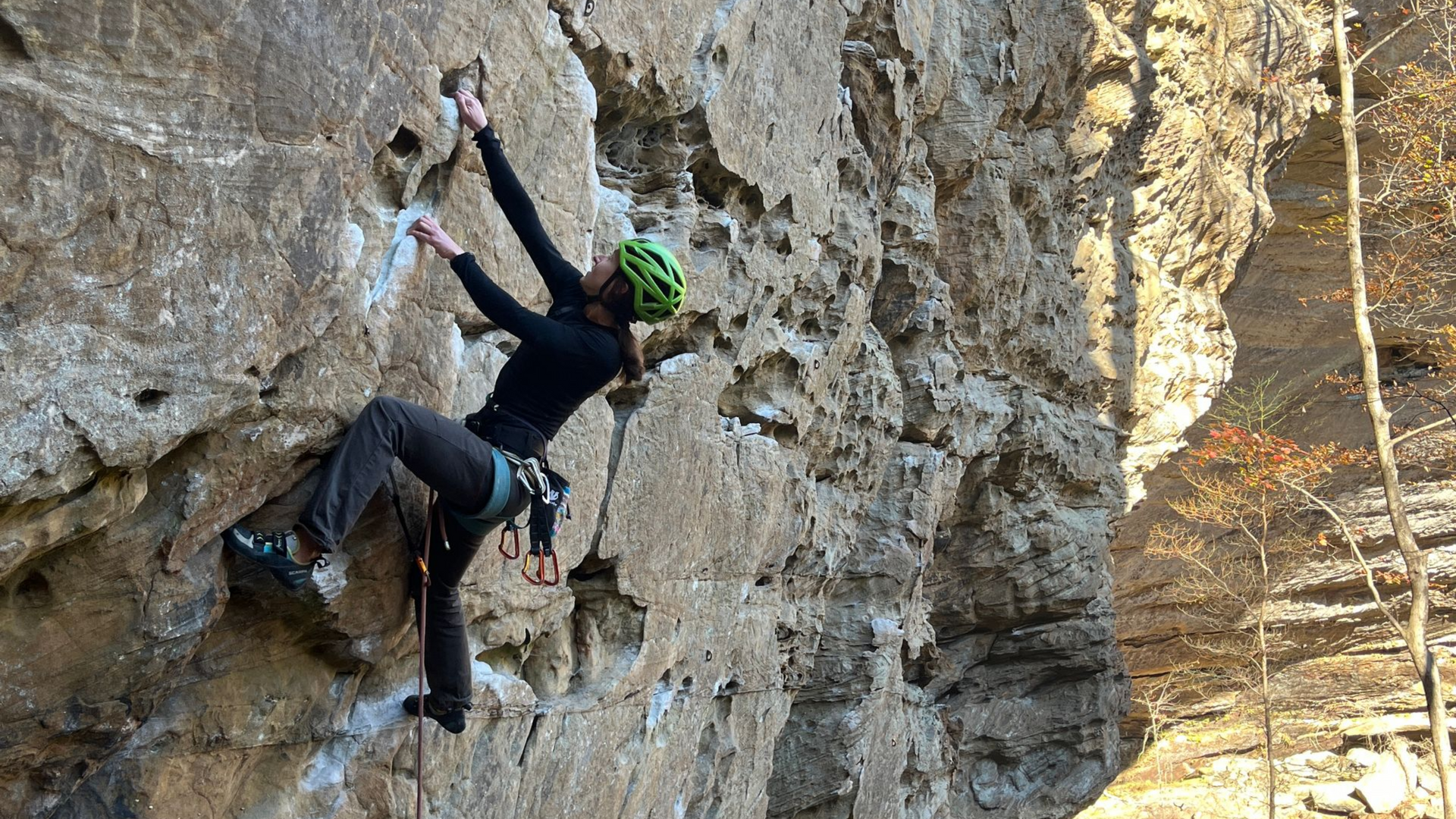
A fitted or semi-fitted athletic shirt is your best bet, such as something you'd wear for a run or a workout. It needs to move well when you reach overhead, which is basically constant in climbing.
- Good choices: Moisture-wicking t-shirts, fitted athletic long sleeves, lightweight base layers. Synthetic or merino wool fabrics dry fast and breathe well.
- Skip:
Heavy cotton t-shirts (they hold sweat and stay wet), anything with a hood that might catch on gear, loose-fitting tops that bunch up when you raise your arms.
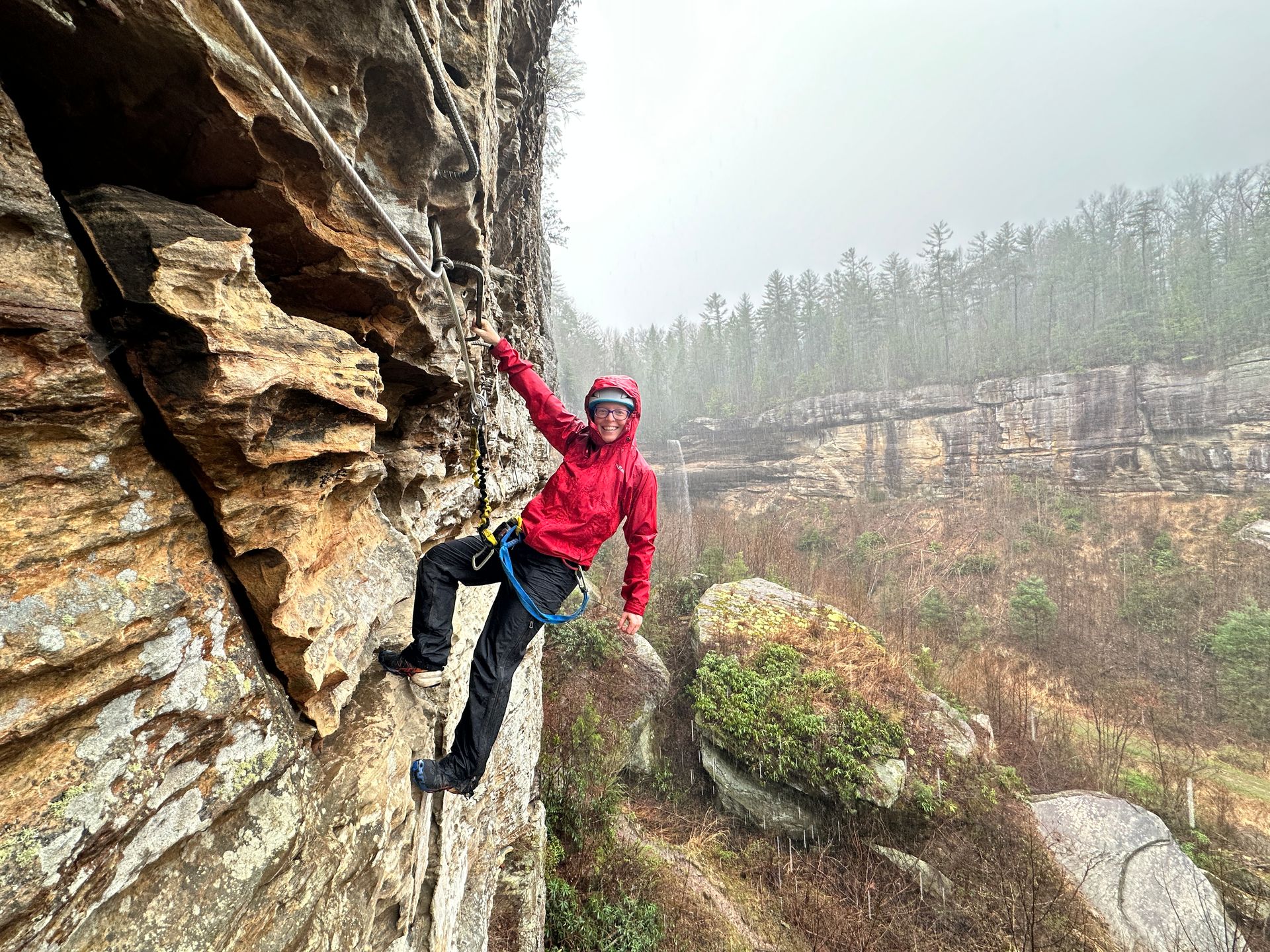
In cooler months or during early morning starts, bring a light mid-layer like a fleece or thin insulating jacket that you can easily tie around your waist when things warm up. The approach hike will heat you up fast, but sitting at the base of a crag in the shade can get cold quickly.
Bottom Half
This is where a lot of first-timers get caught out. Jeans are the most common mistake as they restrict movement, don't breathe, and become miserable when wet or sweaty. You want something stretchy and durable.
- Good choices:
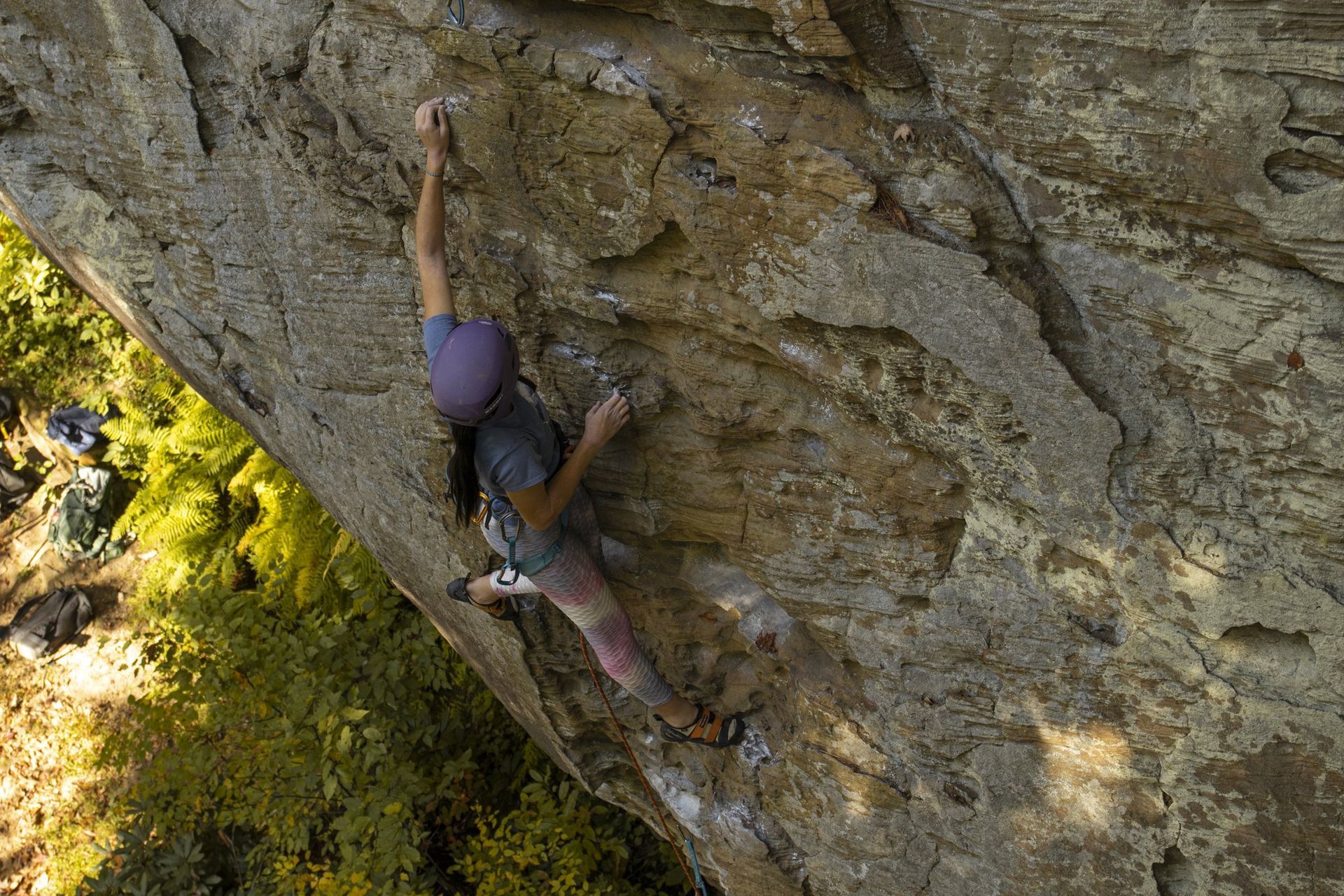
Stretchy hiking pants or joggers, athletic leggings, climbing-specific pants if you have them. The key is a fabric that lets you step high, squat low, and move sideways without fighting your clothes. Many hiking or climbing pants will be gusseted which gives you that extra range of motion.
- Skip:
Jeans (really, just don't), very short shorts, unless they are like a biking short (the harness leg loops can get uncomfortable), anything with a rigid waistband that sits exactly where your harness will sit.
A note on shorts: they're fine for warm weather climbing, but longer shorts or pants are more comfortable with a harness and give your skin some protection from the rock and trail. If you do wear shorts, aim for mid-thigh length or longer.
Footwear
You'll be wearing climbing shoes on the actual routes, either your own or a rental pair from your guide. But you'll also be hiking to the crag and spending time at the base, which means your approach footwear matters too.
- Good choices:
Trail runners, hiking shoes, or sturdy sneakers with decent grip. Something closed-toed closed heel with traction that you don't mind getting muddy.
- Skip:
Sandals, flip flops, brand new shoes you'd be upset to dirty, or anything with a slick sole.
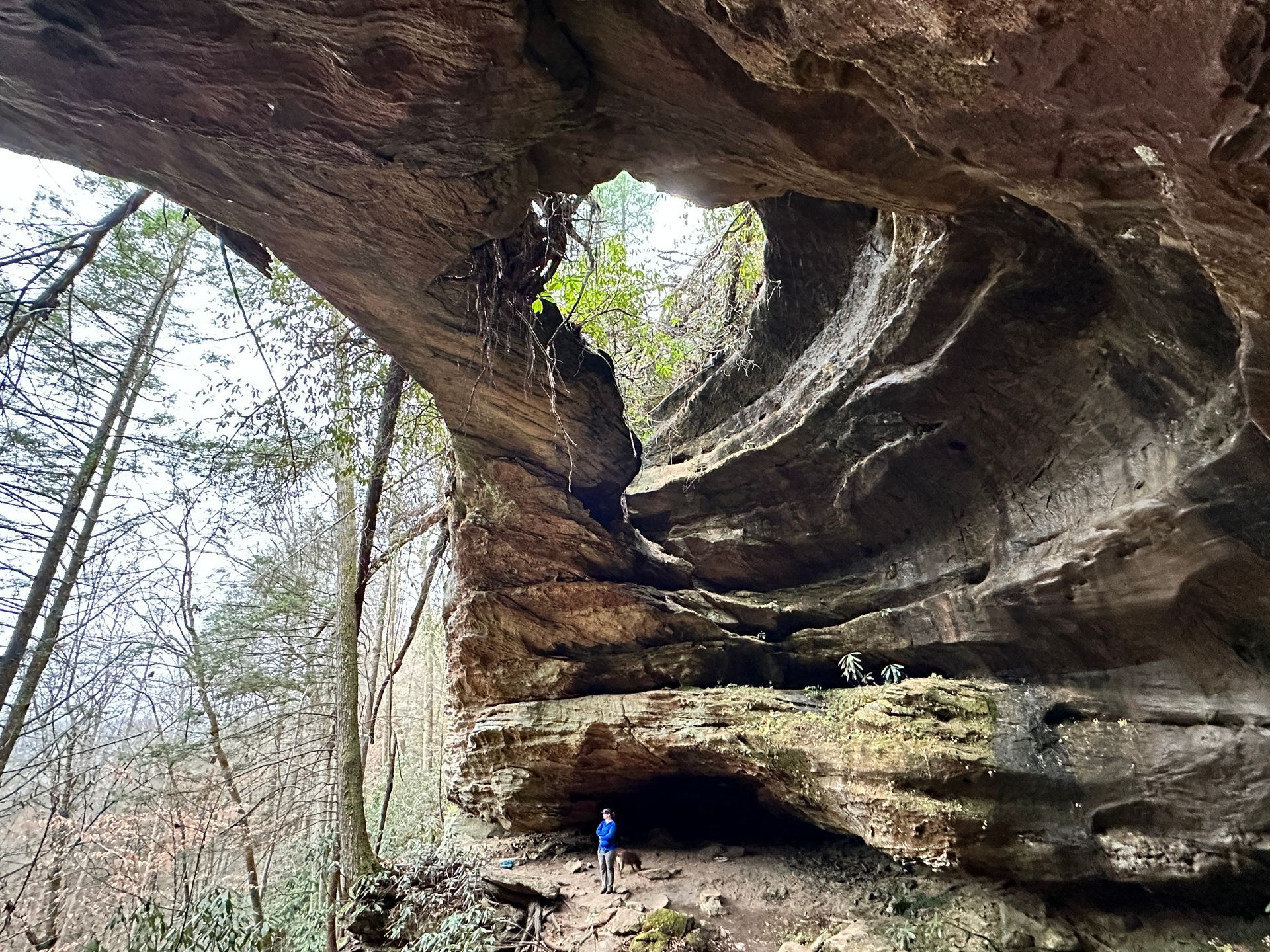
Approach trails in the Gorge can be muddy, rooty, and occasionally slick, especially after rain or in spring. Good grip goes a long way. If you want to go deeper on what to bring for your feet and the rest of your kit, see the packing section below.
Quick Reference: What to Wear and What to Skip
| Item | Good Choice | Skip It |
|---|---|---|
| Shirt | Fitted athletic tee or long sleeve, moisture-wicking fabric | Heavy cotton, hooded tops, anything loose that bunches overhead |
| Pants / Bottoms | Stretchy hiking pants, athletic leggings, joggers | Jeans, very short shorts, rigid waistbands |
| Approach Shoes | Trail runners, hiking shoes, grippy sneakers | Sandals, flip flops, slick-soled shoes |
| Mid Layer | Light fleece or insulating jacket you can tie around your waist | Heavy coats, bulky sweaters, anything you can't easily remove |
| Rain Layer | Lightweight waterproof or water-resistant shell | Ponchos (awkward with a harness), heavy rain coats |
| Accessories | Hat for sun, sunglasses, light gloves for cold mornings | Dangly jewelry, loose scarves, anything that could catch on gear |
Dressing for the Season at the Red River Gorge
The Gorge has four distinct seasons and each one has its own clothing considerations. Here's a quick overview:
Spring (March - May)
Temperatures can swing dramatically in a single day. Pack layers you can add or remove easily. A rain layer is non-negotiable as spring storms pop up fast and the Gorge holds moisture. Mornings can be genuinely cold, afternoons warm and humid. Waterproof or water-resistant approach shoes are worth it this time of year.
Summer (June - August)
Hot and humid is the summer default at the Red. Lightweight, breathable fabrics and moisture-wicking everything. Sun protection matters so a hat and sunscreen on any exposed skin. Hydration is as important as clothing. You'll sweat more than you expect, especially on the steep approach trails.

Fall (September - November)
The best season to climb at the Red, and the clothing is relatively forgiving. Layers such as a base layer, a mid layer, and a shell cover most scenarios. Mornings start cold, afternoons often warm up beautifully. Pack a hat and gloves for early starts, and always bring something waterproof.
Winter (December - February)
Winter climbing at the Red is very much a thing with south-facing walls that get sun and can be surprisingly warm on clear days. But cold starts and wind chill are real. A proper base layer system, insulating mid layer, and windproof outer shell are important. Thermal leggings under climbing pants are worth considering for early season days.
Things You Don't Need to Stress About
First-timers sometimes overthink this. A few things that are genuinely not worth worrying about:
- Wearing climbing-specific brands. You don't need to buy anything special before your first trip. Athletic wear you already own will almost certainly work fine.
- Keeping your clothes clean. You're going to get dirty. Rock, chalk, and trail dirt are all part of the experience. Wear something you're okay with getting a little beat up.
- Looking the part. Nobody at the crag is judging your outfit. The climbing community is famously welcoming to beginners. Show up in whatever works and focus on having a good time.
If you're putting together your full kit and want to know what else to throw in the bag beyond clothing, we covered all the often-forgotten essentials such as climbing tape, belay glasses, seat pads, and more in
Red River Gorge Climbing Trip: What to Pack (Besides Your Gear). It's worth reading alongside this one.
Clothing for a Guided Trip vs. Going on Your Own
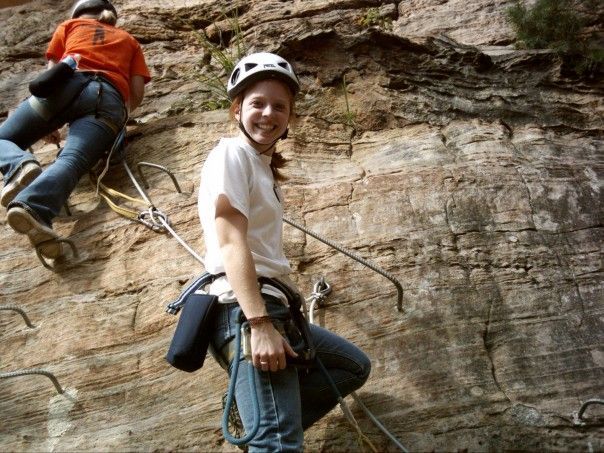
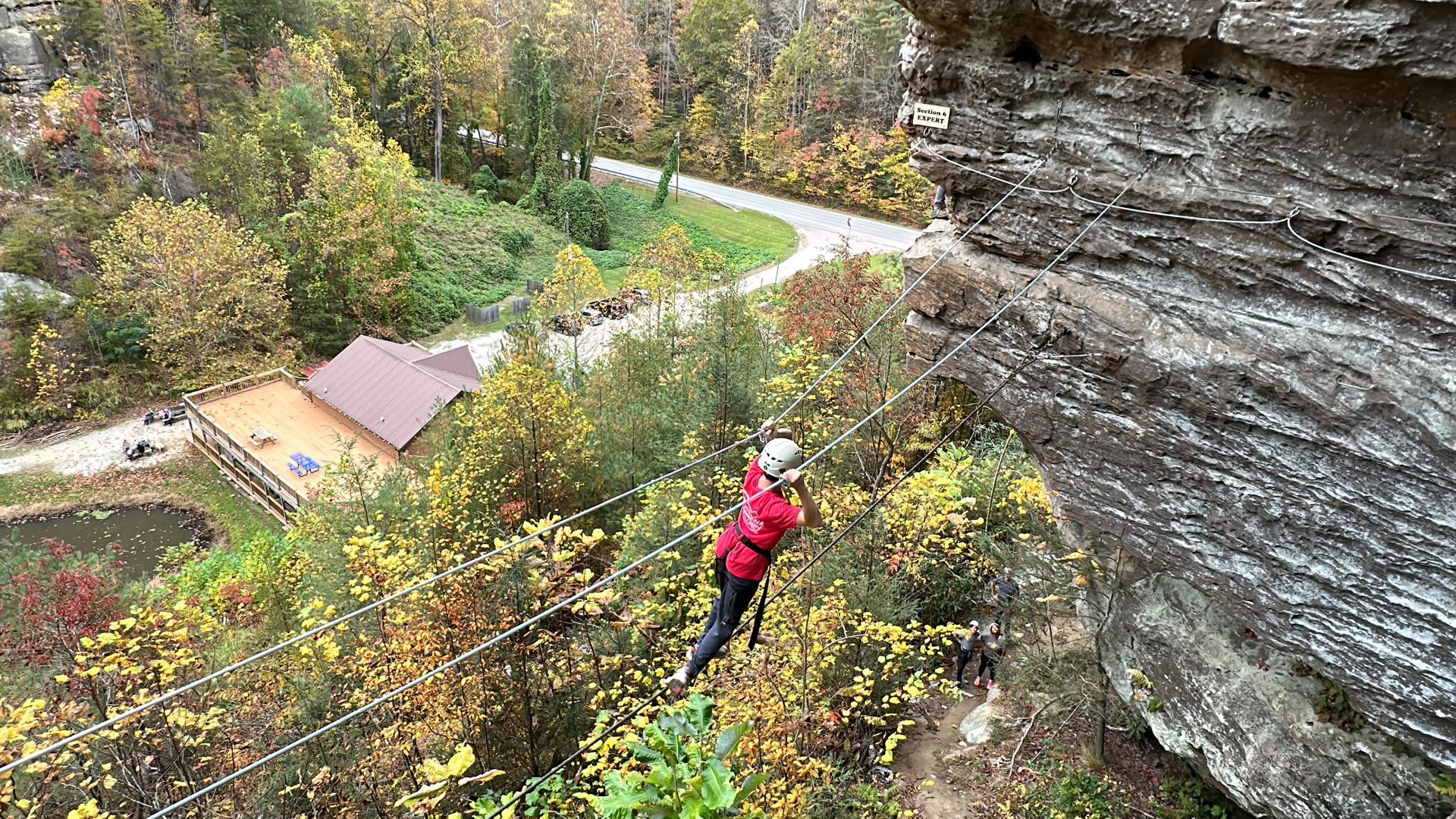
If you're coming out with Southeast Mountain Guides for your first time, the clothing advice above covers everything you need. We provide all the technical gear like a harness, helmet, rope, quickdraws, so your job is just to show up dressed for a day outside.
One thing worth knowing: you'll be wearing a harness for most of the day. The leg loops sit across your upper thighs and the waist belt sits just above your hip bones. Anything uncomfortable in those areas, tight waistbands, thick seams, very stiff fabric, will become more noticeable over a few hours. Simple, flexible layers in those zones make a real difference.
Want to know what the rest of a guided day looks like from start to finish? We put together a full walkthrough in
What to Expect on a Guided Rock Climbing Trip in Red River Gorge: Schedule, Tips, and How to Prepare. It covers check-in, gear, how the day flows, and what to bring and is a great companion read before your first trip.
You're More Ready Than You Think
The most common thing we hear from first-time climbers at the end of their day is some version of "that was so much easier to get ready for than I expected." Stretch pants, a t-shirt, and decent shoes. That's most of it. The rest is just showing up curious and ready to move.
If you're ready to book your first guided climbing or Via Ferrata experience at the Red River Gorge, Southeast Mountain Guides would love to have you. We'll take care of the technical gear and you just focus on dressing for the hike and showing up ready to have a great day.
See you at the crag!
→ Book a Red River Gorge Climbing Guide